After more than a month of testing and evaluating the Sonos Ace from an audio engineer’s perspective, this in-depth review covers everything from sound quality and ANC performance to build quality and unique features. Unlike the sponsored showcase that came before this, this review is entirely independent.
Sonos has no editorial control here, which means you will get an honest breakdown of whether the Sonos Ace is the right headphone for you or not. There is a lot to love about the Sonos Ace, some things that need improvement, and a few potential deal breakers depending on what you are looking for. Let us dive in.
Table of Contents
First Impressions
Typically, when a brand talks about how much attention to detail they put into their products, it goes in one ear and out the other. It often comes across as a cliche replication of what brands think they need to do to mimic that Apple effect, and it almost never lives up to the hot air. The Sonos Ace is one of the rare times when those words have real substance, and that feeling came before any conversations with the company behind it.
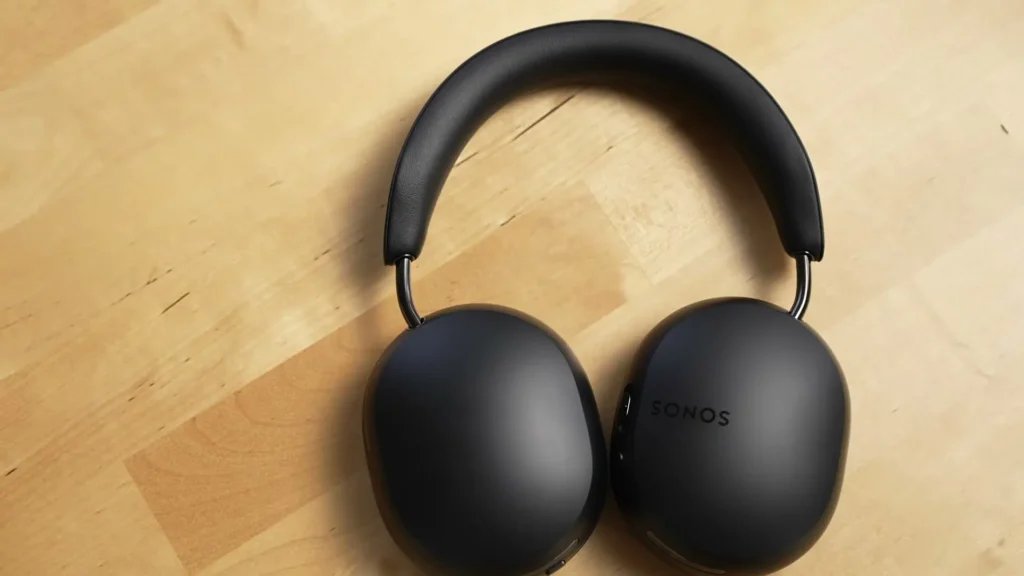
The asymmetric design is an excellent example of this thoughtful approach. The quiet logo, the angled headband, and the different colored ear cups and buttons are intuitive indicators that make the orientation of the headphones obvious without being overbearing. You may not even consciously notice these details at first, but they make picking up and wearing the headphones feel natural and effortless.
Build Quality and Design
In many ways, the Sonos Ace looks like what you would expect a follow-up to the AirPods Max to be, with a far more modern and refined aesthetic. Its build quality sits somewhere between the AirPods Max and the Sony WH-1000XM5.
It has a premium feel with metal elements like the stainless steel headband extension, but it retains the lightness that comes from using plastic over metal for the ear cups, similar to the XM5.
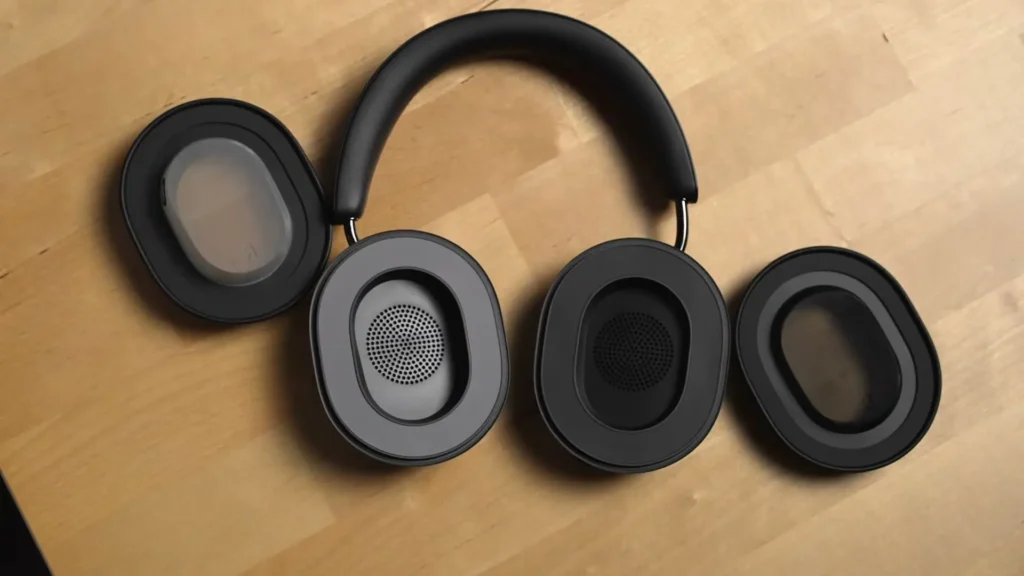
Unlike the XM5, the Sonos Ace somehow resists fingerprints even in black. It also offers more ear depth, feels cooler to the touch, and has a firmer cushion feel compared to the XM5. One thing worth noting is that the Sonos Ace is not rated for any water resistance. It will likely handle sweat fine and survive a light drizzle, but you would not want to wear it in a storm.
One drawback is that the ear cups tend to feel hot and sweaty over extended listening sessions. This was noticeable even while watching a movie, without any physical activity involved. This is something you do not experience with the AirPods Max, which is more breathable by comparison.
When asked if replacement ear cups made from a different, more breathable material could be offered, Sonos indicated that it might be difficult since it could negatively affect ANC performance, which is a genuine disappointment.

Controls
The content button on the Sonos Ace is a standout feature. It utilizes two pieces of metal instead of a single piece, which makes it more defined, more tactile, and genuinely satisfying to use.
You can slide it up and down to adjust the volume or press it in for other actions. The first time you use it, the reaction is simply, this makes so much sense. It is an obvious idea in retrospect, yet it has not been seen on other headphones before.
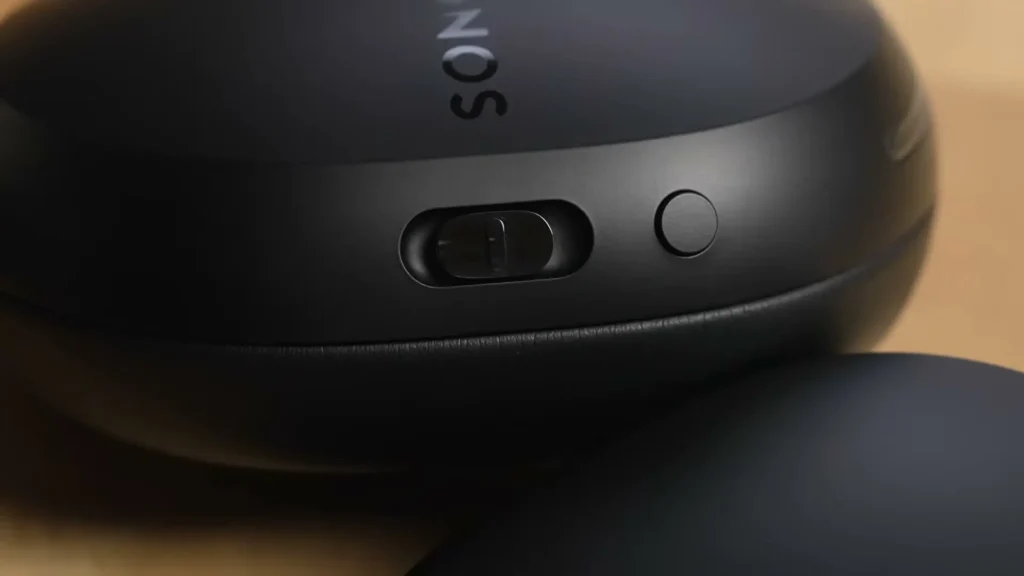
Swipe gestures make sense when a robust tactile control is not available, but they get in the way when a proper physical control exists. Alongside the content button, there is a separate button to cycle between awareness modes such as ANC and transparency, and another button to power the headphones on and off and handle pairing. As a complete package, this is the best set of controls seen on any headphones to date.
Also Read: Turtle Beach Atlas 200 Headset Review
Microphone Performance
The Sonos Ace has eight microphones. Some contribute to ANC and transparency performance, while others are dedicated to picking up and isolating your voice during calls.
Microphone performance is strong overall. Wind rejection is handled well, and voice isolation is clean during calls and video meetings. The objective tests conducted during this review demonstrate that the Sonos Ace performs at a high level for call quality, making it a solid choice for anyone who frequently uses headphones for Zoom meetings or phone calls.
Active Noise Cancellation and Transparency Mode
Most headphones have average active noise cancellation and transparency modes that fall short of the industry-leading performance from Sony and Apple. So where does the Sonos Ace land? Based on objective listening tests conducted across quiet rooms, simulated cafe environments, and windy outdoor settings, the Sonos Ace sits among the industry leaders.
This is genuinely shocking for a first-generation headphone, especially when many established companies have failed to reach this level across multiple product generations.
The transparency mode is particularly impressive. It feels very close to simply taking the headphones off, with only a slight bump in the 800 to 1 kHz range that gives away any imperfection. That is a subtle audio engineering observation that most listeners will never notice. For a first attempt, Sonos has absolutely nailed this.
Battery Life and Connectivity
Battery life on the Sonos Ace is excellent. With ANC turned on, the headphones last 30 hours, and a 3-minute charge delivers an additional 3 hours of playback. After extended testing, these numbers appear accurate.
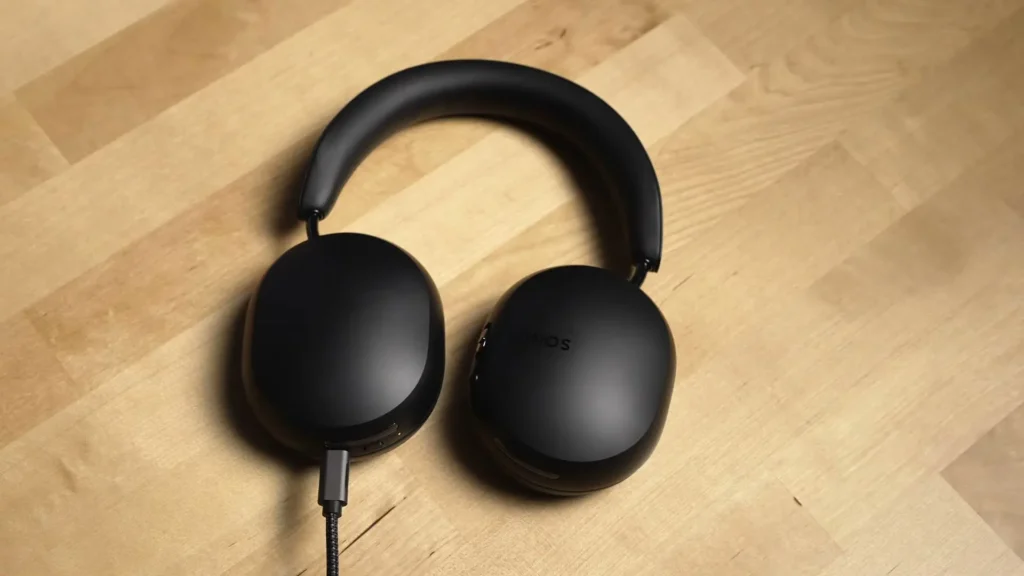
The Sonos Ace supports Bluetooth 5.4, which provides a solid connection at greater distances. Walking around a house, upstairs, downstairs, and to the far end without disconnections is entirely possible. There is no official word on AirPlay or Chromecast support, but it would not be surprising if that capability arrived given the Bluetooth 5.4 support and the Snapdragon chip inside.
That Snapdragon chip also brings support for lossless audio, but only on supported Android devices. iPhones do not support this codec. Lossless audio is still accessible using the included USB-C to USB-C or USB-C to headphone jack cables, though you cannot listen passively since the Sonos Ace needs to be powered on. At a price point of $450, wanting the best available audio quality including full lossless support across all platforms is not unreasonable.
TV Audio Swap
The headline feature for the Sonos Ace is its TV Audio Swap capability, specifically its integration with the Sonos Arc soundbar. It works well. You can quickly move your audio from the soundbar to the headphones and back again with a tap in the app or a long press on the content button.
The switch takes only a second, and the sound effect when audio moves back to the soundbar is a genuinely nice touch, making it feel like the sound is physically being flung across the room.
The volume on the soundbar is set to a low level during the transition to avoid a sudden blast of loud audio, which is a thoughtful detail. Unfortunately, the TV Audio Swap feature is not yet available in the Android app, though it is planned for release.
It was also not compatible with Sonos’ other soundbars or speakers at the time of filming, which means you need to spend over $1,100 combined on the Sonos Arc and the Ace headphones to access this feature. That is not a small investment.
Some have argued that the TV swap feature is not a significant deal because other headphones can connect to a TV via Bluetooth. That is valid, but the method is more complex with other headphones. Additionally, most headphones and earbuds only support two devices for multi-point connectivity. In many ways, the Sonos Ace supports three, with one of those being your Sonos soundbar.
Spatial Audio
Spatial audio is generally considered a gimmick. Most implementations replicate the sound of being in an untreated room, full of reverb and unwanted reflections.
That is a sound that audio engineers spend a great deal of time and money eliminating. It is hard to understand why anyone would want to intentionally recreate a bad-sounding room through their headphones.
The Sonos Ace is different. Its spatial audio implementation does not sound like an untreated room. There is no artificial reverb or echo. It sounds natural, which means it is actually usable. What makes it even more compelling is a clever feature tied to head tracking.
When you get up and walk away from what you are watching, the headphones detect that you are moving and lock the audio to standard stereo so you do not feel disoriented. When you sit back down, it switches back to spatial audio automatically.
Sound Quality
Sound quality is the area where things get nuanced. Many people describe the Sonos Ace as neutral or balanced. That is simply not accurate. The sound is scooped, with an emphasis on the high lows or low mids, a bit more clarity and air in the high end compared to the Sony XM5, but more mellow in the treble region than the AirPods Max.
What is particularly notable is how the sub-bass frequencies feel subdued. The low end starts to fall off below around 60 Hz, which is the range that delivers that incredible rumbling bass heard in films and bass-heavy music. Tracks that showcase deep sub-bass on other systems feel noticeably lighter on the Sonos Ace.
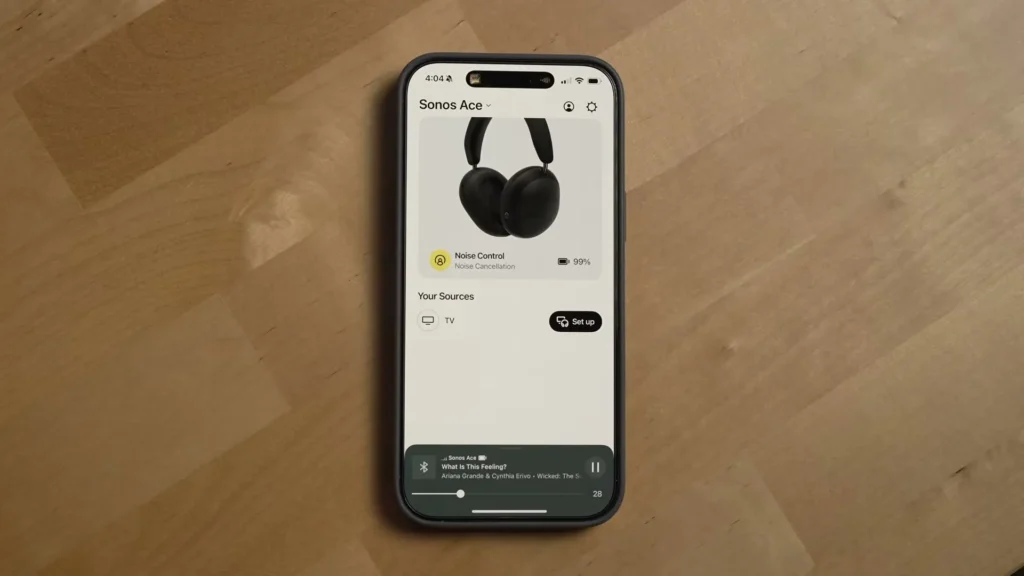
As a whole, the Sonos Ace is not among the best sounding options at this price point, but it is not offensive or terrible either. The app provides limited help, offering only high and low EQ sliders. Most competing brands at least offer a mids slider when providing EQ control, so the absence of one in the Sonos app is puzzling and disappointing.
The best way to understand the sonic character of the Sonos Ace is to compare the default tuning to a custom EQ built specifically for it. With the right EQ applied, the low mids open up, the high mids gain presence, and the overall balance improves significantly. The Sonos Ace handles EQ well, which means that with the right settings applied, it becomes a genuinely enjoyable daily listening experience.
Custom EQ settings are available for channel members and are built using Wavelet, which is currently available for Android only. If you are on Android and are considering the Sonos Ace, the custom EQ is well worth exploring as it brings the headphone into a much more competitive sonic territory.
A Minor but Notable Issue
Over the course of more than a month of use, a faint digital buzzing and clicking sound was noticed in the right ear when nothing was playing. It is not super loud or obvious, but it is present. This primarily occurs in transparency mode after pausing audio, and sometimes in ANC mode. It is not a deal breaker since it only appears when audio is not playing and does not occur consistently, but it is worth flagging. Hopefully this is something Sonos can address through a software update.
Who Should Buy the Sonos Ace?
Deciding whether the Sonos Ace is the right headphone for you comes down to a few key questions and priorities.
If you are already in the Sonos ecosystem, the Ace makes a strong case for itself, especially as support expands to more Sonos devices. If you are not already in the Sonos ecosystem and want the TV Audio Swap feature, getting into it is a significant financial commitment. If you do not care about TV Audio Swap, that point becomes irrelevant.
If you want headphones with strong ANC and an industry-leading transparency mode, the Sonos Ace is an excellent option. If vegan leather is uncomfortable for you or you tend to sweat easily, the Sonos Ace may not be the best fit. If you want a premium build that is significantly lighter than the AirPods Max, the Sonos Ace is worth serious consideration.
If you are looking for value and affordability, the $450 price point is a tough sell. If you want an excellent microphone for calls and video meetings, the Sonos Ace delivers. If you are chasing a balanced, audiophile-grade sound straight out of the box, the Sonos Ace will not satisfy that requirement without EQ adjustments.
If you are on Android, enjoy tinkering with EQ settings, and are open to using a custom tuning profile, the Sonos Ace with the right EQ becomes a well-rounded, enjoyable daily driver. Despite its sound tuning deficiencies, the Sonos Ace is genuinely enjoyable to use. With the custom EQ applied, it becomes one of the more well-rounded options available, even if it does not lead in every individual category. That balance across multiple areas is rarer than it might seem.
If purchasing for personal use and not for reviewing purposes, the $450 price tag would be a difficult pill to swallow. At $350, it would be a much easier recommendation. Keep an eye out for sales, as the value proposition improves considerably at a lower price point.
Specifications Table
| Feature | Details |
|---|---|
| Price | $450 |
| Driver Type | Not specified (closed-back over-ear) |
| Bluetooth Version | 5.4 |
| Codec Support | Lossless (Android supported devices only), standard codecs for iOS |
| Battery Life | 30 hours with ANC enabled |
| Fast Charging | 3 hours playback from 3 minutes of charging |
| Microphones | 8 microphones total |
| ANC | Yes, industry-leading performance |
| Transparency Mode | Yes, industry-leading performance |
| Spatial Audio | Yes, with head tracking and position recalibration |
| TV Audio Swap | Yes, compatible with Sonos Arc soundbar |
| Multi-point Connectivity | Yes, up to 3 devices (including Sonos soundbar) |
| Water Resistance | None rated |
| Controls | Content button (volume slider + press actions), ANC mode button, power/pair button |
| Ear Cup Material | Vegan leather (replaceable, magnetically polarized per side) |
| Headband Material | Vegan leather (more durable grade, non-replaceable) |
| Headband Extension | Stainless steel |
| Cable Options | USB-C to USB-C, USB-C to 3.5mm headphone jack |
| Passive Listening | Not supported, must be powered on |
| App EQ | High and low sliders only |
| Weight | Lighter than AirPods Max |
| Chip | Snapdragon (inside) |
| Android App TV Swap | Planned, not available at time of review |
| Colors Available | White (with green accents), Black (fingerprint resistant) |
Final Verdict
The Sonos Ace is an impressive first entry into the personal headphone audio space. Its build quality, controls, ANC, transparency mode, and spatial audio implementation are all genuinely competitive with or superior to what established players offer. The TV Audio Swap feature is a clever and well-executed idea for Sonos ecosystem users, and the microphone performance is excellent across the board.
Read More: SteelSeries Nova 3 Review