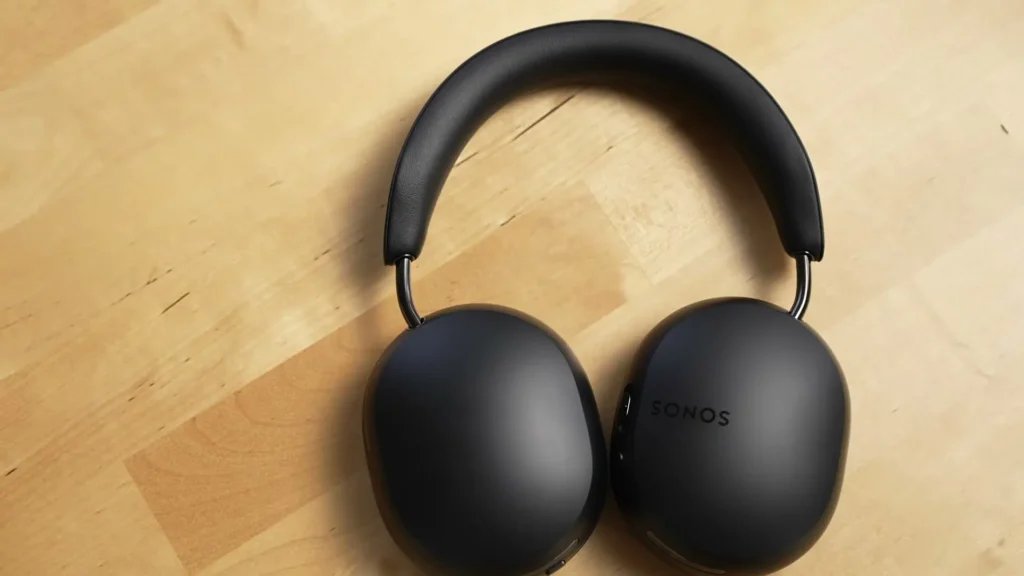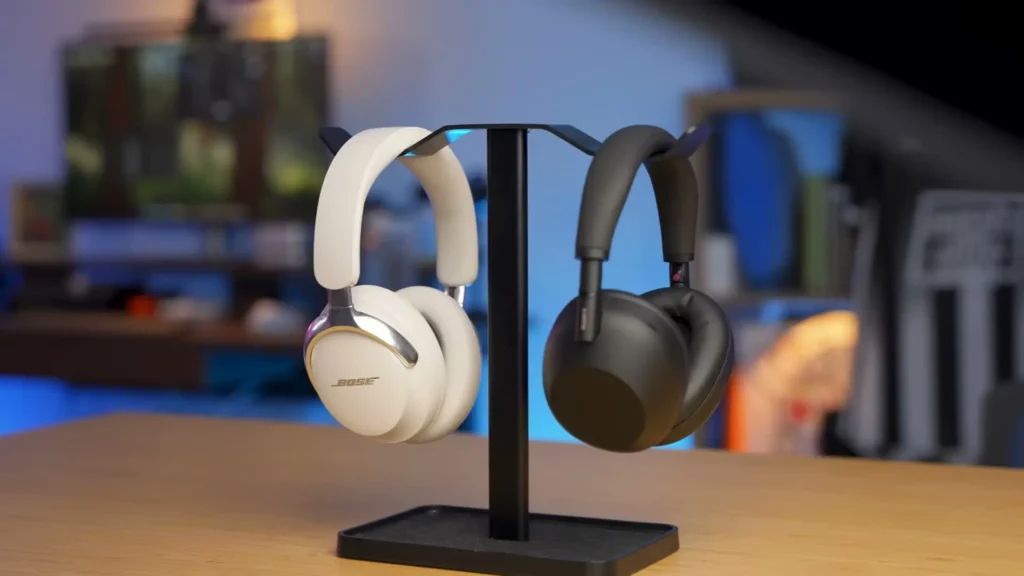
These are without a doubt two of the best Bluetooth headphones you can buy right now. In many categories, they sit at number one and number two in the industry, delivering great active noise cancellation, great sound quality, and excellent microphones across the board. These are flagship headphones among a sea of flagship headphones. But which one is actually the best to buy?
This is a brutal head-to-head comparison between these headphones, going shot for shot testing ANC, microphone quality, sound quality, and everything else you need to know when deciding between them. So let’s get started.
Table of Contents
Active Noise Cancellation
This is probably the most exciting category for most people, especially those who travel frequently. Depending on where you look on the internet, you will find different answers, and that is largely because most people view ANC as a one-dimensional thing, as in which one is more powerful. But realistically, it depends on which frequencies are being blocked.
The testing method used here involves playing a sound at a set distance and gradually turning the volume up until the headphones can no longer block it. That recorded volume level determines which pair performs better at ANC.
Starting with the sound of a jet, which represents a lower booming frequency that most headphones are specifically trying to block, the Sony headphones reached 58.5 dB while the Bose reached 59.4 dB. That is about 1 dB more in favor of the Bose. So for those lower frequencies, the Bose headphones are still marginally better.
However, if you are trying to block higher frequency sounds like people talking, pots and pans banging around, or anything that is not a low droning HVAC-style sound, the story changes. In that situation, the Sony headphones did a measurably better job, blocking up to 43.9 dB compared to 41.4 dB on the Bose in a silent environment.
There is also another dimension that many people overlook, which is the cleanliness of the silence itself. Both headphones do an excellent job of minimizing static and artifacts, but Sony sounds marginally cleaner with slightly less hissing or white noise.
Concluding the ANC comparison, it really depends on what you are trying to block. They both do a great job, but because Sony was very close to Bose in the low frequencies while being significantly better in the higher frequencies, the Sony WH-1000XM6 earns the personal pick for slightly better active noise cancellation overall.
Transparency Mode
As far as transparency goes, this is a slightly different story. Bose has a great feature called Active Sense, where if you have transparency mode on and a really loud sound suddenly occurs, the Bose headphones will reduce that sound quite a bit.
This is similar to what has been seen on AirPods, and it is something that does not currently exist on Sony. While Sony does allow you to set up automatic switching between ANC and transparency in the settings, it does not function quite the same way as Active Sense on Bose.
As far as the actual sound goes in transparency mode, Sony sounds very natural, although slightly muffled and a little quieter than your actual ambient surroundings. Bose, on the other hand, sounds a bit more natural and closer to the same volume as your environment, to the point where it is very easy to forget you even have headphones on.
Regarding white noise in transparency mode, since it uses a very similar engine to ANC, Sony is also a little cleaner here with noticeably less white noise. Bose has just the slightest amount of white noise, almost imperceivable honestly, but definitely more than Sony when you compare them side by side.
Microphone Quality
Sony has been talking up their new chip and the increased number of microphones on the WH-1000XM6. The real question is whether that actually translates into a better call experience or whether the audio ends up sounding overcompressed.
For the indoor test, both headphones performed well and would serve you adequately on a phone call in a quiet environment. That is the easy part.
The outdoor test with significant traffic noise nearby is where things get more interesting. Sony did talk extensively about their extra microphones and new processor, and the outdoor environment was a genuine challenge with a lot of noise present.
Both headphones attempted to isolate the voice from the surrounding chaos, and the results showed meaningful differences in how each handled compression and background noise suppression.
Also Read: Razer BlackShark V3 vs V3X
Fit and Comfort
Getting into a more subjective category now, the fit and comfort of these headphones come down to some noticeable physical differences. Looking at them side by side, the Bose headphones move around quite a bit more. They are very flexible with a loose hinge and have deeper ear cups.
The Sony headphones look a little more sturdy and do not wiggle around as much, though they still rotate quite a bit, making them very adaptable to different head shapes.
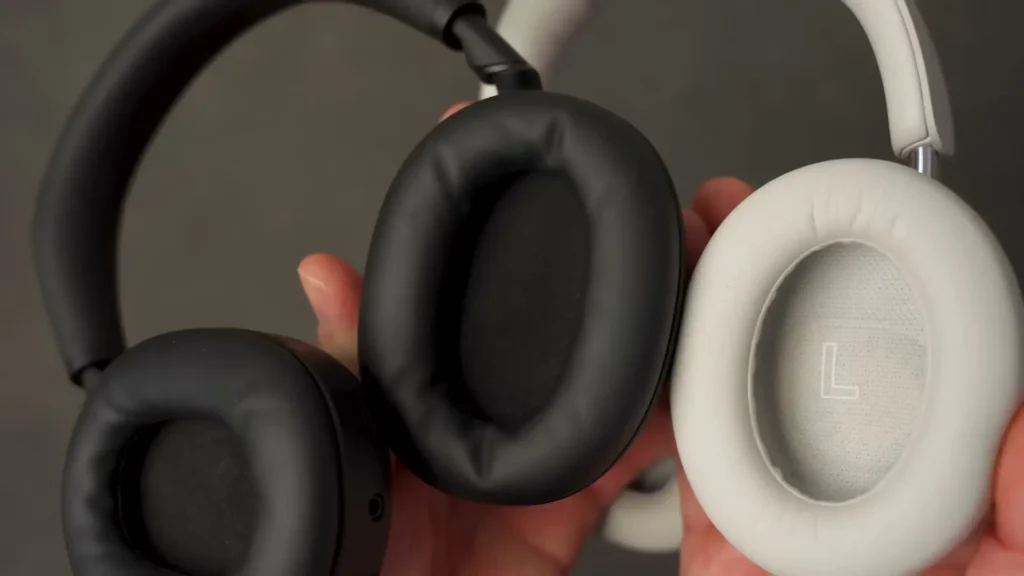
The headband on the Bose is narrower, which may make them a better fit for smaller heads. The Sony headphones actually got wider in this generation, which feels very comfortable with no overbearing clamping force, though smaller heads might find that they fall off a little too easily.
When actually wearing them, the shallower cups on the Sony headphones feel slightly less comfortable. They also tend to get a little hotter, and in humid conditions, the material used on the ear cups has a texture that makes you aware of the humidity, almost feeling slightly sticky.
The Bose headphones, on the other hand, feel very light and comfortable. The deeper ear cups also help them stay on more securely when you are moving around. As far as comfort, fit, and security go, both are great options, but Bose easily takes the win in this category.
Design and Build
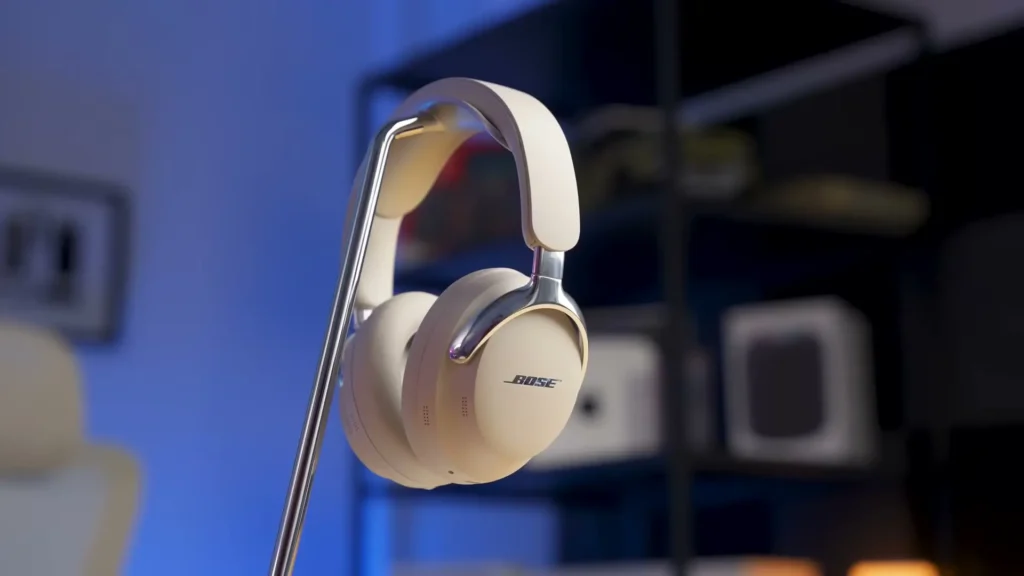
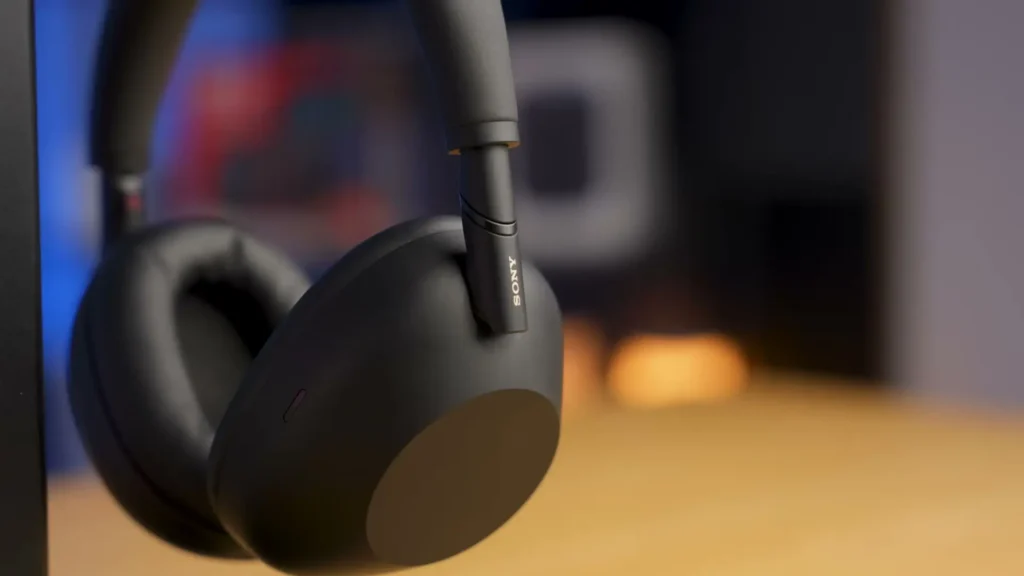
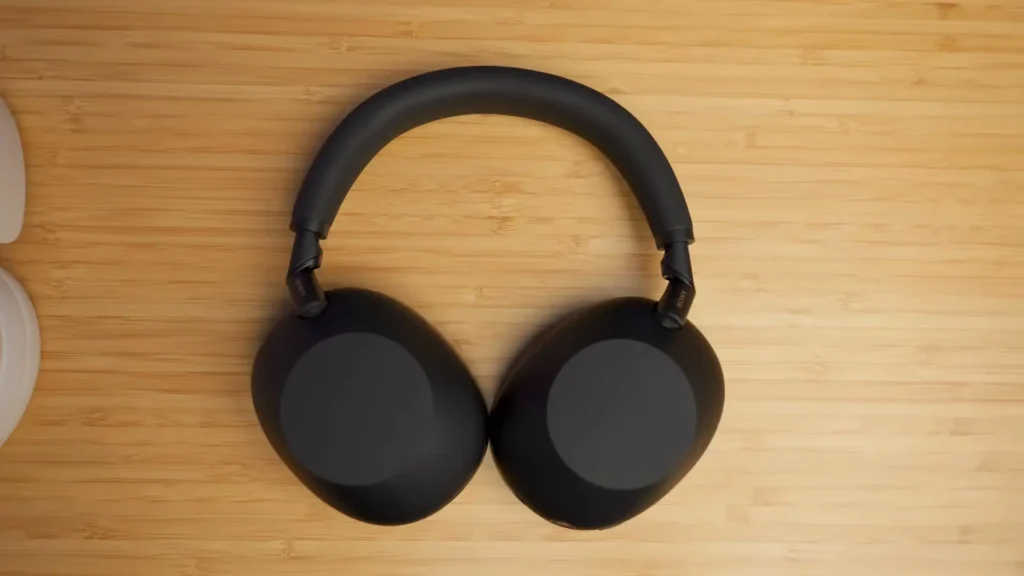
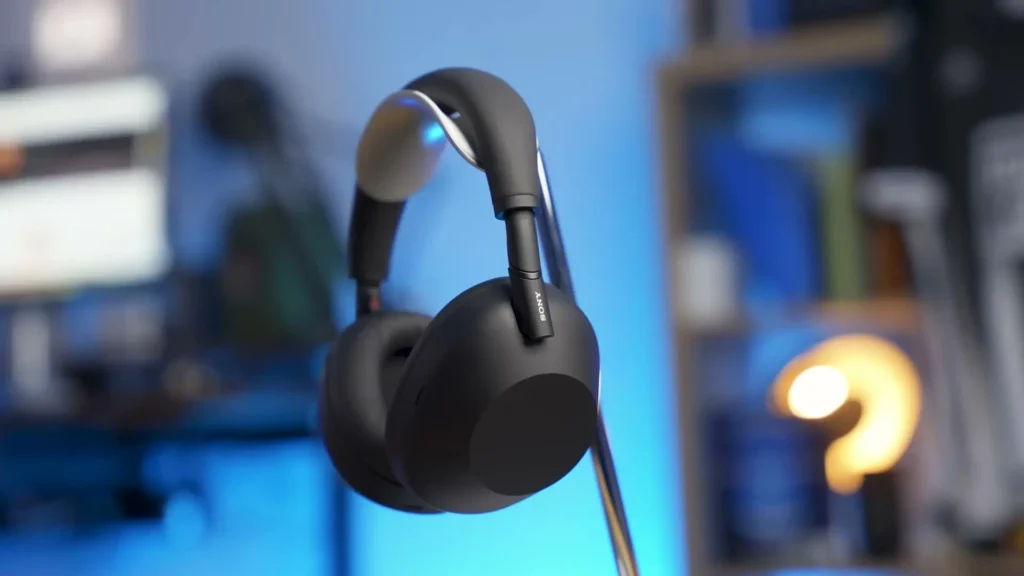
Moving on to design, both headphones now fold, which is a meaningful update from Sony this year. The Sony WH-1000XM6 comes in three colors: black, white, and midnight blue. The midnight blue option is particularly appealing. Bose similarly offers black, white, and lunar blue, along with a deep plum color that looks absolutely awesome, even if it is harder to find in person.
As far as aesthetics go, it is worth noting that Sony does not place their logo on the outside of the headphones, unlike Bose. Which one actually looks better is very much a matter of personal taste.
Cases
Both headphones come with hard shell cases, which is a great inclusion that many headphones on the market skip. Both cases store a charging cable and an audio cable comfortably. However, there is a fundamental difference worth mentioning.
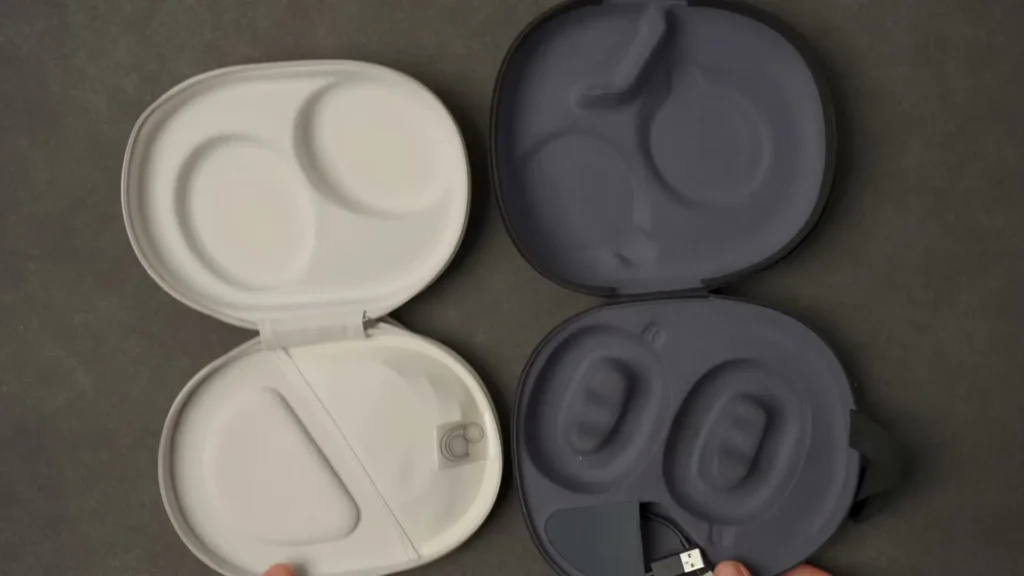
The Bose headphone case uses a zipper while the Sony case was redesigned this year to remove the zipper entirely. At first glance, this might seem like a minor detail, but in practice it is significantly more convenient.
You can open the Sony case with one hand very easily, and it stays securely closed in a bag without coming open accidentally. It is a small design choice that makes a noticeable everyday difference.
Controls
The controls between these headphones are quite different, and this is an area where Sony pulls ahead considerably. Sony offers two buttons that are very distinctly shaped, a recessed round power button and a protruding long slot-style noise cancellation button, so you will never mix them up.
Beyond the buttons, you also have two-axis swipe gestures for skipping tracks and adjusting volume, tap and hold options, double tap controls, head gesture controls for answering and rejecting calls, and the palm option that activates transparency mode when you place your palm over the ear cup. This is incredibly useful when you need to hear an announcement or have a quick conversation without removing the headphones.
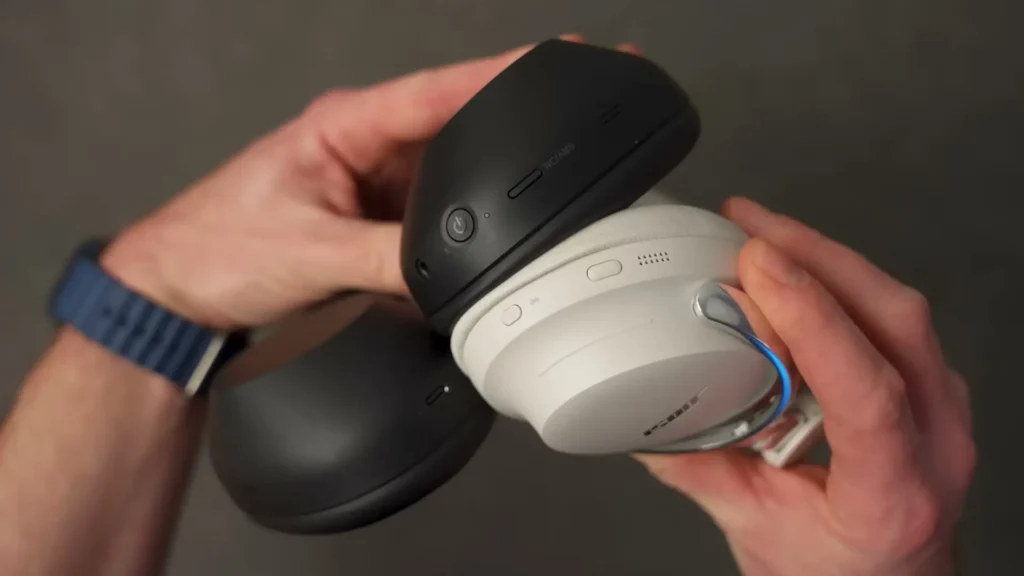
Bose, on the other hand, represents one of the biggest shortcomings of these headphones in this area. The volume slider on the Bose is genuinely nice, with a small ridge that sits in a great position for sliding your thumb up and down. You can also tap and hold it as a shortcut, for example to open Spotify.
But the two control buttons feel very similar to each other, making it easy to mix them up. Additionally, there is a bit of a strange quirk with powering on the Bose headphones. If you press and hold the power button and wait for the confirmation sound, there is a delay that can make you unsure whether the press registered, leading to accidental power-offs. It is a minor but noticeable issue in daily use.
Sound Quality
Starting with the technical side, the Bose QuietComfort Ultra headphones feature Snapdragon Sound, which should theoretically enable very high resolution codecs.
However, Snapdragon Sound is a little confusing in practice. It does not work with all phones, and even if your Android phone has a Snapdragon chip inside, that does not necessarily mean it will support the higher resolution codecs on the Bose headphones.
Sony, on the other hand, supports SBC, AAC, LC3, and LDAC. LDAC is incredibly common across a wide range of Android phones, meaning high-resolution audio will work on almost every Android device you pair with the Sony headphones. For iPhone users, neither headphone will offer high-res codecs since Apple does not support them, so that becomes a personal platform consideration.
For non-Bluetooth listening, both headphones include an audio port. Sony uses a standard 3.5mm jack, which means any common cable will work. Bose uses a slightly smaller proprietary port, and while a cable is included in the case, you would likely need to purchase an adapter for a different or longer cable.
Neither headphone supports USB Type-C audio playback, which would have been a genuinely useful feature for charging and listening simultaneously. Sony does, however, now support playback while charging via Bluetooth, which is a positive step forward.
Getting into the actual sound when listening, Bose is a little bassy but otherwise fairly consistent across the frequency range. It does sound like you are sitting slightly further away from the music compared to the Sony headphones. Sony, on the other hand, sounds noticeably better than previous generations, which is saying something given how well those already performed.
The Sony headphones lean toward a U-shaped frequency response compared to Bose, with a slight lift on the highs and a similar lift in the lows that extends a bit further, meaning some of the lower mids are also slightly elevated. The lift in the highs gives a perception of greater clarity and crispness that many listeners will find appealing.
Overall, a lot of people listening to these side by side are likely to prefer the Sony headphones in terms of audio quality, particularly because the LDAC support means high-resolution listening is accessible to far more Android users. That said, both headphones genuinely have excellent sound quality and neither delivers the muddy experience that is unfortunately common with many other headphones on the market.
Battery Life
There is a clear advantage for Sony when it comes to battery life. Both headphones claim 30 hours of playback with active noise cancellation enabled, so they are equal at the baseline. The difference is that Sony allows you to turn ANC off entirely, pushing battery life up to approximately 40 hours. If you need to stretch your battery on a long trip, that option is available.
Bose, consistent with their approach on other headphones and earbuds, keeps the engine running at all times. You can set it to a neutral position that sits between transparency and ANC, but the system is still active, so you will not get the same additional battery life that you can unlock on the Sony headphones.
Features and App Experience
Neither headphone includes USB Type-C playback or NFC pairing, though NFC has largely become irrelevant with fast pair now widely available. Sony brings several standout features to the table.
The Speak to Chat feature is particularly useful because when you start talking, the headphones automatically lower your music volume, activate transparency mode, and let you have a conversation without touching the headphones at all. This is great for quick interactions like being asked a question at a coffee shop.
Sony also has a background music feature that creates the sensation of your music being played throughout an entire room around you rather than directly in your ears. It is a unique experience that is hard to describe until you try it, and while it is not something everyone will use daily, it is well executed. Additionally, Sony includes DSEE Extreme, which upscales lower quality audio files to sound closer to a higher resolution experience.
Bose offers customizable modes, so you can set up presets like a running mode with specific transparency and ANC settings already dialed in, making it easy to switch between different listening environments.
Sony has true multipoint connectivity that automatically switches between your phone and laptop without any input needed. If you are listening to music on your laptop and a call comes in on your phone, the headphones switch automatically. Bose also has multipoint connectivity, but switching between devices requires pressing the power button manually.
Regarding the apps, Sony recently redesigned their app and it looks really quite good. It shows your current codec, battery level, and your headphone status at a glance, with customizable cards on the home screen. Digging deeper into any specific setting transitions into the older Sony app interface, but the amount of control available is impressive.
You can customize button functions, toggle head gestures on and off, connect to streaming services like Amazon and Spotify for instant access to your recent content, and configure scene-based settings that automatically adjust based on your location or movement.
The Bose app is clean and minimal by comparison. It does attempt to promote products within the interface, which is not ideal, but beyond that it covers volume control, mode creation, source switching between connected devices, immersive audio toggling, and shortcut customization. It is a simpler experience but well organized.
Price
At the time of this comparison, both the Sony WH-1000XM6 and the Bose QuietComfort Ultra are priced at $449 on their respective websites. That is not a small amount of money, but considering what both headphones offer in terms of ANC performance, audio quality, build quality, and features, they genuinely earn their place at the top of the market.
Comparison Table: Sony WH-1000XM6 vs Bose QuietComfort Ultra
| Feature | Sony WH-1000XM6 | Bose QuietComfort Ultra |
|---|---|---|
| Price | $449 | $449 |
| ANC (Low Frequencies) | 58.5 dB | 59.4 dB |
| ANC (High Frequencies) | 43.9 dB | 41.4 dB |
| ANC Winner | Sony (Overall) | Bose (Low Freq Only) |
| Transparency Mode | Natural but slightly muffled | Very natural, near real volume |
| Active Sense / Loud Sound Protection | No | Yes |
| White Noise in ANC/Transparency | Less (Cleaner) | Slightly more |
| Microphone Quality | Strong with new chip | Solid performance |
| Comfort and Fit | Good, slightly warmer | Excellent, lighter feel |
| Ear Cup Depth | Shallower | Deeper |
| Folding Design | Yes (New for XM6) | Yes |
| Case Type | Zipperless hard shell | Zippered hard shell |
| Colors Available | Black, White, Midnight Blue | Black, White, Lunar Blue, Deep Plum |
| Controls | Extensive (gestures, swipes, palm) | Basic (two buttons, volume slider) |
| Audio Codecs | SBC, AAC, LC3, LDAC | Snapdragon Sound |
| High Res Audio Compatibility | Most Android phones | Select Android phones only |
| 3.5mm Audio Port | Standard 3.5mm | Proprietary smaller port |
| USB-C Audio Playback | No | No |
| Playback While Charging | Yes | No |
| Battery Life (ANC On) | 30 hours | 30 hours |
| Battery Life (ANC Off) | 40 hours | Not available |
| Multipoint Connectivity | Yes (Auto switching) | Yes (Manual switching) |
| Speak to Chat | Yes | No |
| Background Music Feature | Yes | No |
| DSEE Extreme (Audio Upscaling) | Yes | No |
| Customizable Modes | Yes (Scene-based) | Yes (User-created modes) |
| App Experience | Feature-rich, partially updated UI | Clean, minimal, with in-app promotion |
| NFC Pairing | No | No |
Final Verdict
Both of these headphones go neck and neck across active noise cancellation, audio quality, and microphone performance. They are genuinely the best of the best right now, and choosing between them ultimately comes down to your personal priorities.
If comfort and fit matter most to you, the Bose QuietComfort Ultra headphones feel lighter, more comfortable over long wear, and the deeper ear cups help keep things cooler and more secure during movement. If you care more about features, codec support, cleaner ANC, more intuitive controls, and a better case design, then the Sony WH-1000XM6 headphones are absolutely the right choice.
Read More: Bose QC35 II vs Sony WH-1000XM3 Headphones