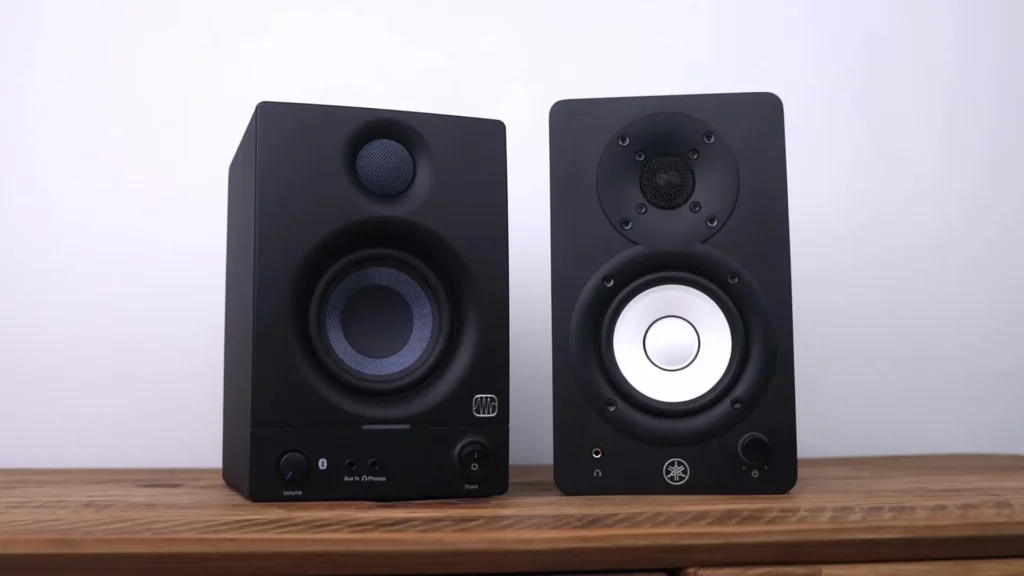
The PreSonus Eris 3.5 has been one of the bestselling and most popular desktop speakers for the past decade. Now, Yamaha has entered the compact monitor space with the brand new HS3, made by the same manufacturer behind the bestselling studio monitors in the industry.
In terms of price, design, and sound quality, it is hard to compete with PreSonus. However, as a previous owner of Yamaha HS studio monitors, there is a strong feeling that the Yamaha HS3s are about to set a new standard.
Before diving in, it is worth noting that for mixing and producing music on a budget, using at least a 5-inch woofer is generally preferred, since speakers this size offer little to no low end. That said, if you are looking for an outstanding pair of desktop speakers or simply cannot afford a bigger pair of monitors, these are the two worth focusing on.

Front Panel Features
Starting with the front panel, both monitors offer a 3.5-inch woofer, a headphone input, a power switch, and a volume knob. The Eris 3.5 features a 1-inch tweeter, while the Yamaha HS3 offers a slightly smaller 0.75-inch tweeter.
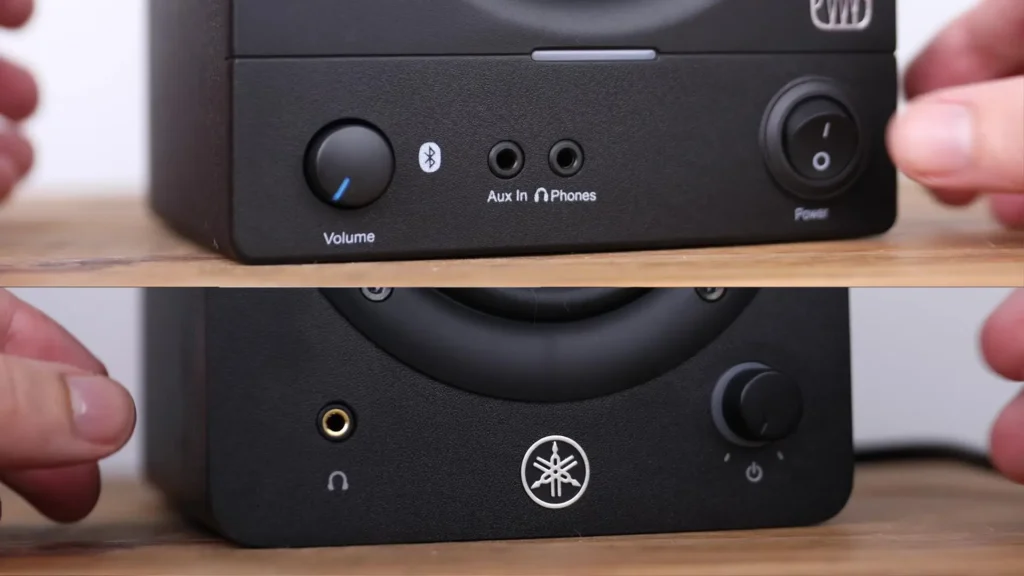
This means you can expect a little more detail and possibly brighter sounding high-end frequencies from the PreSonus Eris 3.5. Additionally, the Eris offers an RCA input on the front panel, which is a nice touch for multimedia purposes.
Back Panel and Connectivity
Moving on to the back panel, both monitors offer their own unique room control and acoustic tuning options. It is worth mentioning that the entire HS series includes these room control settings, so you are definitely getting good value there. Both monitors offer line inputs, a line input RCA connection, and TRS inputs.
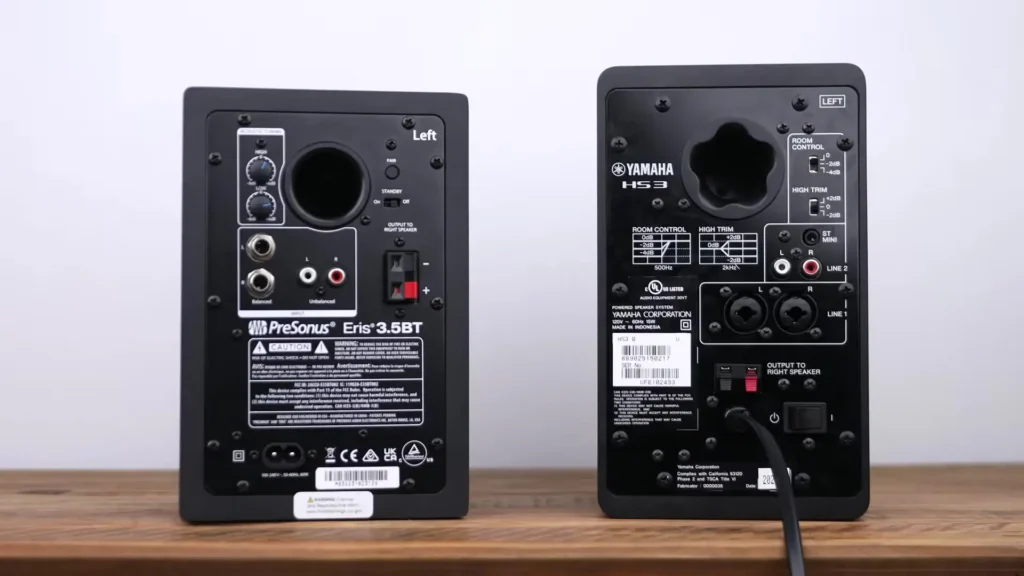
However, the Yamaha HS3 also offer an XLR input option, which is something you more commonly find on studio monitors. Since both setups consist of one active and one passive monitor, both also offer red and black cable speaker connections. The Eris monitors are available with Bluetooth connectivity at an additional cost of $50, while the HS3s do not come with a Bluetooth option.
Sound Quality
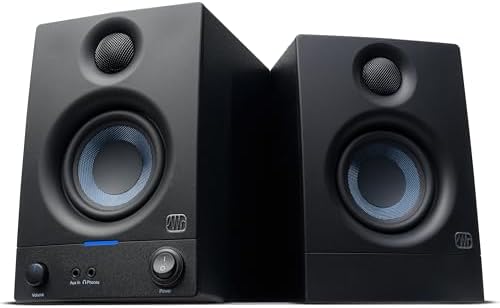
After listening to both monitors through a sound test, both speakers check a lot of boxes. The PreSonus Eris 3.5 delivers a bright and detailed sound that works really well for casual listening and multimedia use. The HS3s, on the other hand, offer a wider frequency range, bringing them closer to the performance standards of the broader HS studio monitor series.
Comparison Table
| Feature | PreSonus Eris 3.5 | Yamaha HS3 |
|---|---|---|
| Woofer Size | 3.5 inch | 3.5 inch |
| Tweeter Size | 1 inch | 0.75 inch |
| Headphone Input | Yes | Yes |
| Front RCA Input | Yes | No |
| TRS Input | Yes | Yes |
| XLR Input | No | Yes |
| Bluetooth | Yes (extra $50) | No |
| Room Control Settings | Yes | Yes |
| Speaker Connection | Active/Passive | Active/Passive |
| Best For | Multimedia/Casual Use | Music Production/Mixing |
| Price | Budget Friendly | Double the Eris 3.5 |
Which One Should You Buy?
Because of the RCA input, Bluetooth connectivity option, and bright sound signature, the Eris 3.5s are as good as it gets for multimedia purposes. However, when looking at the Yamaha HS3, the fact that they share similar features with the rest of the HS series and offer a bigger frequency range makes them the better pick for music production and mixing. The one thing that cannot be overlooked is that the HS3s are still double the price of the Eris 3.5s, which is a significant factor depending on your budget.
Read More: Real Apple AirPods Max vs Fake AirPods Max