There’s a reason the HiFiMAN HE400se keeps showing up in nearly every “best budget audiophile headphone” conversation online. It’s a full-size, open-back planar magnetic headphone that typically sells for somewhere between $100 and $150, and it manages to compete with headphones that cost two or three times as much. For a lot of people, it’s the headphone that made planar magnetic sound accessible for the first time.
This HiFiMAN HE400se review digs into what you’re actually getting for the money: the build, the comfort, how it sounds across bass, mids, and treble, what it needs to sound its best, and how it stacks up against the usual suspects it gets compared to. I’ll also be upfront about where it falls short, because no $100-something headphone is flawless, and pretending otherwise wouldn’t be doing you any favours.
Quick Verdict
The HiFiMAN HE400se is, quite simply, one of the best value entry points into planar magnetic sound available right now. It uses HiFiMAN’s “stealth magnet” design, magnets shaped to reduce acoustic interference as sound waves pass through them, technology that used to live exclusively in headphones costing hundreds of dollars more. The tuning is close to neutral, detail retrieval punches above its price class, and the soundstage is genuinely open. The trade-offs: a stiff, noisy stock cable, plasticky earcup construction, and a mid-treble region that some listeners find a touch peaky. It also needs real amplification to sound its best, a phone or laptop jack alone won’t cut it.
HiFiMAN HE400se Specifications
| Spec | Detail |
| Driver type | Planar magnetic with stealth magnets |
| Design | Open-back, over-ear |
| Impedance | Approximately 25-35 ohms (varies by production batch) |
| Sensitivity | Around 91-94 dB |
| Frequency response | Rated roughly 20 Hz – 20 kHz |
| Weight | Roughly 370-390 grams |
| Cable | Detachable, dual 3.5mm connectors to single 3.5mm/6.35mm plug |
| Price | Approximately $100-$150 |
Is the HiFiMAN HE400se Good?
Short answer: yes, especially for what it costs. It’s not a giant-killer that embarrasses $1,000 flagships, but at its price bracket it’s hard to find a dynamic-driver headphone that matches its resolution, instrument separation, and overall transparency. Where it loses points is in the accessory kit and some build details, not in the core listening experience.
Design and Build Quality
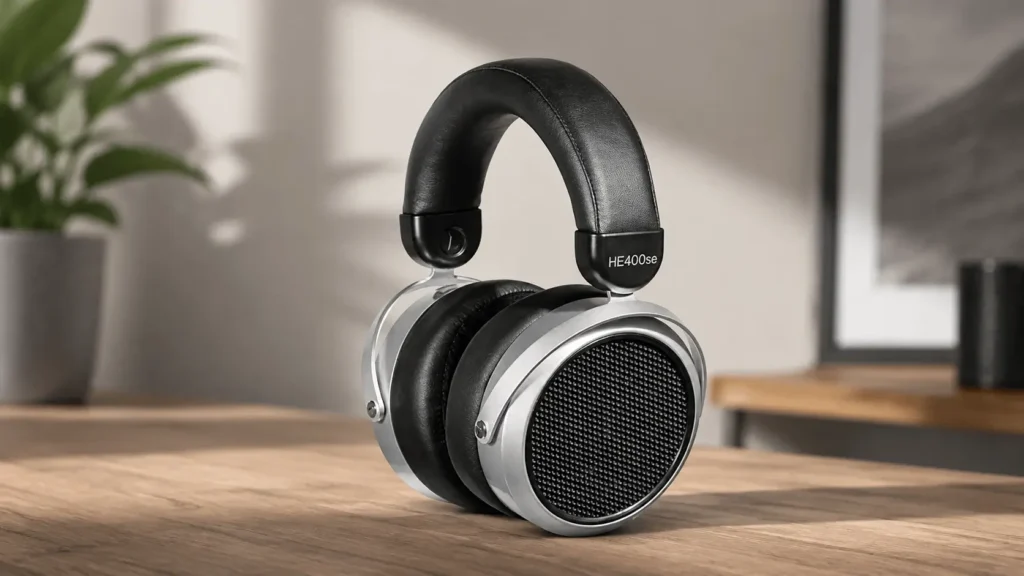
The HE400se carries over the general shape HiFiMAN introduced with the Deva line: a suspended-strap headband, metal yokes, and earcups that rotate to accommodate different head shapes. It’s a genuine step up from HiFiMAN’s older, clunkier designs, but at this price point there are compromises. The yokes and headband hardware are metal and feel solid, but the earcup housings themselves are made of noticeably cheaper plastic, and the back panel covering the driver has a slightly hollow feel when you tap it.
The earpads combine faux leather on the outer surface with a felt-like material where they contact your skin. They’re comfortable, but the padding material doesn’t feel as premium as what you’d find on the step-up Sundara. The biggest letdown in the box is the cable: it’s stiff, prone to noticeable microphonics (that annoying rubbing noise transmitted through the cable when it moves), and just unpleasant to use at a desk. It is detachable though, so swapping in an aftermarket cable is an easy fix if it bothers you.
Comfort
Comfort on the HE400se is solid, if not class-leading. Clamping force is moderate, neither too loose nor uncomfortably tight, and the earcups have enough adjustment range to fit most head shapes. The main complaint that comes up across long listening sessions is mild headband soreness after an hour or two, since the padding is on the thinner side and the headphone itself isn’t ultra-light at nearly 400 grams. It’s comfortable enough for normal listening sessions, just not quite in the same league as pricier HiFiMAN models with more generous headband padding.
Sound Signature
This is where the HE400se earns its reputation, and it’s the entire reason people keep recommending it over headphones that cost noticeably more.
Bass
Bass on the HE400se is close to flat, with a mild roll-off starting around 40Hz. It’s not a bass-boosted or “fun” tuning by any means, but it’s also not thin or anemic. There’s enough low-end presence to give kick drums and bass guitar real body, and the control here is genuinely impressive for the price: notes stay tight and don’t bleed into each other even in busy, layered tracks. The one nitpick some listeners raise is that bass decay is slightly quicker than what you’d get from a step-up planar like the Sundara, giving drum hits a touch less physical weight.
Mids
The midrange is mostly flat through the lower register, with HiFiMAN’s characteristic rise in the upper mids that doesn’t really kick in until after 2kHz, later than most target curves recommend. The practical effect is a midrange that leans slightly dry and forward-sounding rather than warm and lush. Vocals and guitars come through with good clarity and detail, though some listeners describe the tone as a bit clinical compared to warmer-sounding dynamic-driver alternatives.
Treble
Treble is generally well-controlled with good extension, but there’s a mild peak in the mid-treble region, commonly cited around the 7kHz mark, that can occasionally make cymbals and hi-hats sound a bit tizzy or thin rather than fully fleshed out. It’s not an aggressive or fatiguing peak the way some budget headphones can be, but it’s noticeable enough that treble-sensitive listeners should be aware going in. It gives the HE400se an airy, detailed top end at the cost of occasionally sounding a touch incomplete on cymbal-heavy material.
Soundstage and Imaging
For the price, the soundstage on the HE400se is a genuine highlight. It’s noticeably more open than closed-back alternatives and even edges out some pricier dynamic-driver headphones in terms of width and a sense of depth. Imaging does a good job of layering instruments so the mix doesn’t feel congested, which is part of why detail retrieval on this headphone punches above its price class: individual elements have room to be heard rather than blurring together.
Do You Need an Amp for the HiFiMAN HE400se?
Yes, and this is one of the more important things to know before buying. Despite reasonable sensitivity specs on paper, the HE400se is noticeably harder to drive well than many competing headphones, including HiFiMAN’s own Sundara. A phone or a basic laptop headphone jack will produce sound, but it won’t come close to unlocking the dynamics and control this headphone is capable of. Budget for at least a modest USB DAC-amp dongle, and ideally a proper desktop amp if you want to hear it at its best.
How the HiFiMAN HE400se Compares
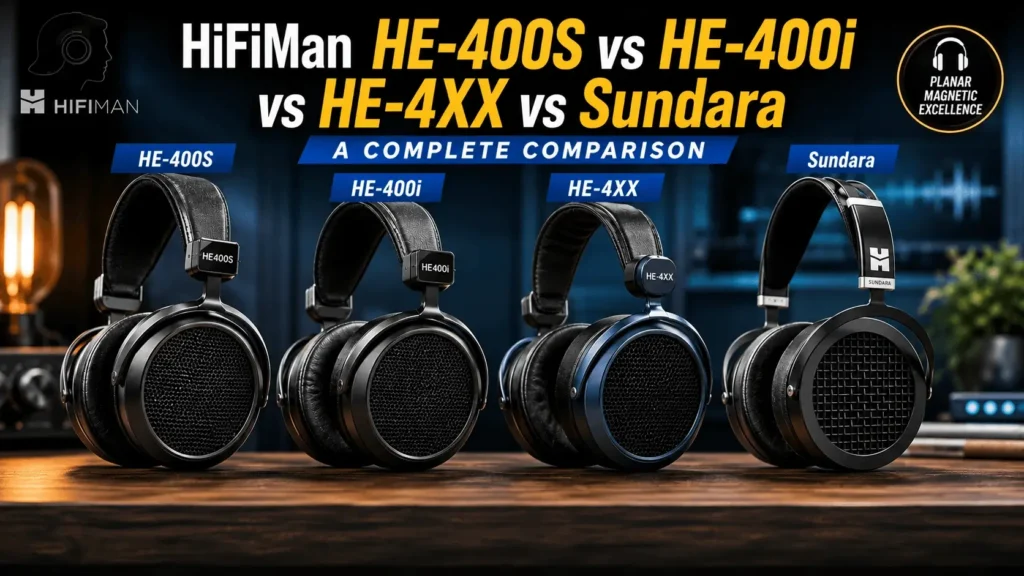
HiFiMAN HE400se vs Sundara: The Sundara is the natural next step up, and it’s a genuine upgrade in build quality, comfort, and bass depth, with a smoother, fuller overall presentation. That said, plenty of listeners find the tuning difference smaller than the price gap suggests, and some even prefer the HE400se’s slightly more neutral, less treble-forward balance. If your budget allows it, the Sundara is worth auditioning, but it’s not a clear-cut must-have upgrade for everyone.
HiFiMAN HE400se vs Sennheiser HD600/HD6XX: This is the classic budget audiophile showdown. The HD600 has a more natural, mellower midrange and a treble that’s completely free of any peakiness, while the HE400se counters with a noticeably wider, more open soundstage and a bit more resolving power. Bass is close between the two, with the HD600 offering slightly more natural weight and the HE400se offering more control and speed. Many people end up preferring the HD600 for timbre and long-term listenability, while gravitating toward the HE400se for outright detail and staging.
HiFiMAN HE400se vs Deva Pro: The Deva Pro adds Bluetooth flexibility and a slightly different build, but doesn’t clearly outperform the HE400se in pure wired sound quality. If wireless use matters to you, the Deva Pro is worth a look; if you only care about sound per dollar, the HE400se remains the stronger value.
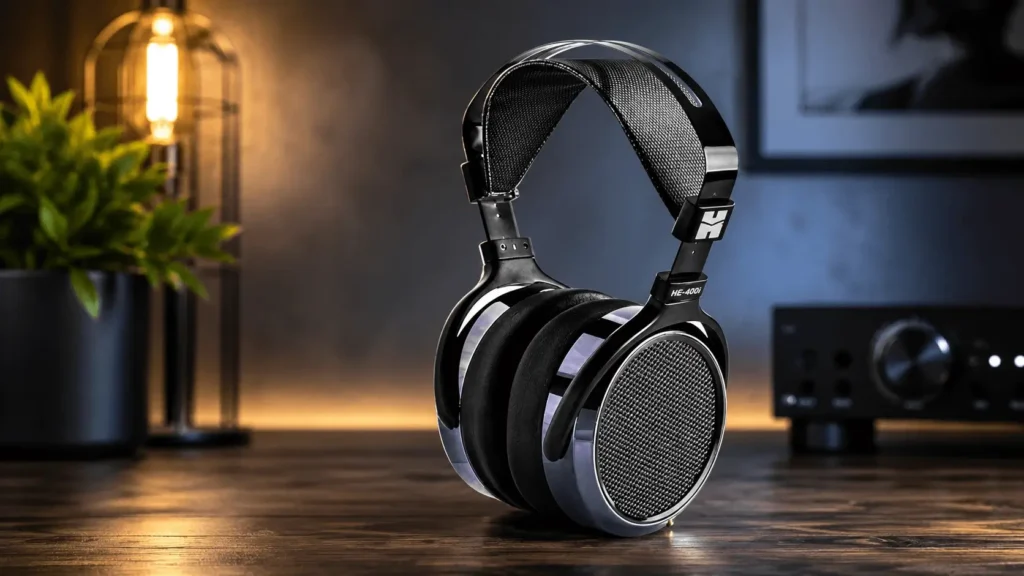
HiFiMAN HE400se vs HE400i/HE400s: The older 400i and 400s models are largely superseded by the HE400se at this point. The HE400se’s stealth magnet design and more modern build make it the easy recommendation over its predecessors unless you find a used 400i or 400s at a steep discount.
Is the HiFiMAN HE400se Good for Gaming?
It’s a mixed bag. The open, spacious soundstage is genuinely enjoyable for positional audio and ambience in games, and detail retrieval helps you pick up footsteps and environmental cues. That said, some listeners find the stage slightly narrower and more closed-in than dedicated gaming-oriented open-backs, and there’s no microphone included, so you’ll need a separate solution for voice chat. It’s a solid, not spectacular, gaming option.
Is the HiFiMAN HE400se Audiophile-Grade?
This comes up a lot, and the honest answer is: it depends on your definition. It uses genuine planar magnetic driver technology and delivers resolution, detail, and soundstage performance that easily beats typical consumer headphones in its price range. It won’t compete with flagship planar or electrostatic headphones costing thousands of dollars, but as an entry point into what “audiophile” headphones actually sound like, it’s one of the most convincing options available under $150.
Pros
- Exceptional resolution and detail retrieval for the price
- Genuinely open, spacious soundstage
- Close to neutral tuning with controlled, well-textured bass
- Stealth magnet planar technology at a budget price point
- Detachable cable, easy to upgrade later
Cons
- Stock cable is stiff and prone to noise
- Earcup housing feels cheap compared to the metal yokes
- Needs a real amp to sound its best
- Mid-treble peak can make cymbals sound slightly tizzy
- Headband padding can cause soreness on longer sessions
Who Should Buy the HiFiMAN HE400se
- Anyone entering the hobby who wants a genuine taste of planar magnetic sound without spending $300+
- Listeners who already own a decent amp or DAC-amp and want a headphone that can use it
- People who prioritize detail and soundstage over bass impact or plush comfort
- Buyers comparing it against the Sennheiser HD600/HD6XX family for their first “real” headphone
Who Should Look Elsewhere
- Anyone without an amp who isn’t willing to buy one
- Commuters or anyone needing isolation; it’s open-back only
- Bass-heavy music lovers who want a warmer, more impactful low end
- Listeners who are especially sensitive to any treble peakiness
Frequently Asked Questions
Is the HiFiMAN HE400se good?
Yes. For the price, it delivers resolution, detail, and soundstage that rival headphones costing significantly more, with the trade-off being a cheaper-feeling cable and earcup build.
Is the HE400se good for gaming?
It’s decent. The open soundstage helps with positional audio, though it lacks a built-in microphone and isn’t quite as spacious as some dedicated gaming-focused open-backs.
Is the HiFiMAN HE400se audiophile grade?
It uses real planar magnetic driver technology and offers a level of detail and clarity well above typical consumer headphones, making it a genuine, budget-friendly entry point into audiophile sound.
What makes the HE400se special?
Its stealth magnet planar driver design, technology once reserved for far pricier headphones, paired with a close-to-neutral tuning and a surprisingly open soundstage at a fraction of the usual planar magnetic price.
Does the HiFiMAN HE400se need an amp?
Yes. It’s harder to drive than its specs might suggest, and a phone or laptop jack won’t unlock its full dynamics. A dedicated DAC-amp is recommended.
HE400se vs Sundara, which should I buy?
The Sundara offers better build quality, comfort, and a fuller low end, but the HE400se gets remarkably close sonically for a fraction of the price. If budget is tight, the HE400se is very hard to argue against.
Final Thoughts
The HiFiMAN HE400se remains one of the easiest recommendations in the entire headphone hobby. It’s not without its rough edges, the cable and earcup plastics are clear cost-cutting measures, and it demands a decent amp to really shine, but the core sound quality it delivers for the price is difficult to argue with. If you’re looking for your first step into genuine audiophile territory and you’re willing to pair it with even a modest amp, the HiFiMAN HE400se deserves a serious look before you spend more elsewhere.
Read More: HiFiMan HE400S vs HE400i vs HE4XX vs Sundara