A few weeks ago, I came across the Skullcandy Aviator 900 on social media, and it caught my attention so strongly that I went to Best Buy that same day, picked up a pair, and made an unboxing and first impressions video. I really wanted to like these headphones, but I ran into issues with distortion and the spatial audio was not working properly.
A couple of days after posting that video, Skullcandy actually reached out and told me there was a firmware issue with a batch of headphones that had gone out. They confirmed that their engineers were able to recreate the problem and that a fix was on the way. By that point, I had already returned the pair, so I told them if they wanted to send me another one, I would be happy to make a follow-up video. That is exactly what this is.
Table of Contents
First Thing I Did: Firmware Update
As soon as the new pair arrived, I took them out of the box, opened the Skullcandy app, and found a firmware update waiting. I updated immediately and went straight into testing.
I queued up some of my favorite songs, gave them a proper listen, and right away I could tell these sounded how they were always supposed to sound. No distortion. The spatial audio feature worked perfectly. From that point on, I was finally able to appreciate the Skullcandy Aviator 900 for what they truly are.

Design and Comfort
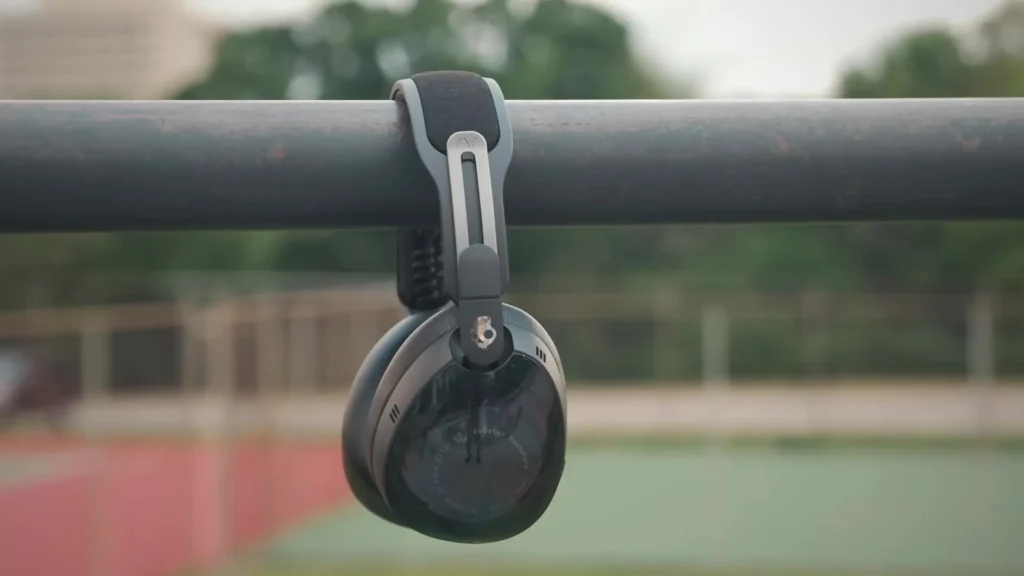
One of the first things I want to highlight is the look and design of these headphones. I mentioned this in earlier videos as well, but the Skullcandy Aviator 900 just looks different from most of the popular headphones on the market right now.
I know these are considered a long-awaited follow-up to a previous Aviator model that Skullcandy released years ago. Personally, I never owned that pair, so there is no nostalgia factor for me. I simply like the way they look because they stand out.
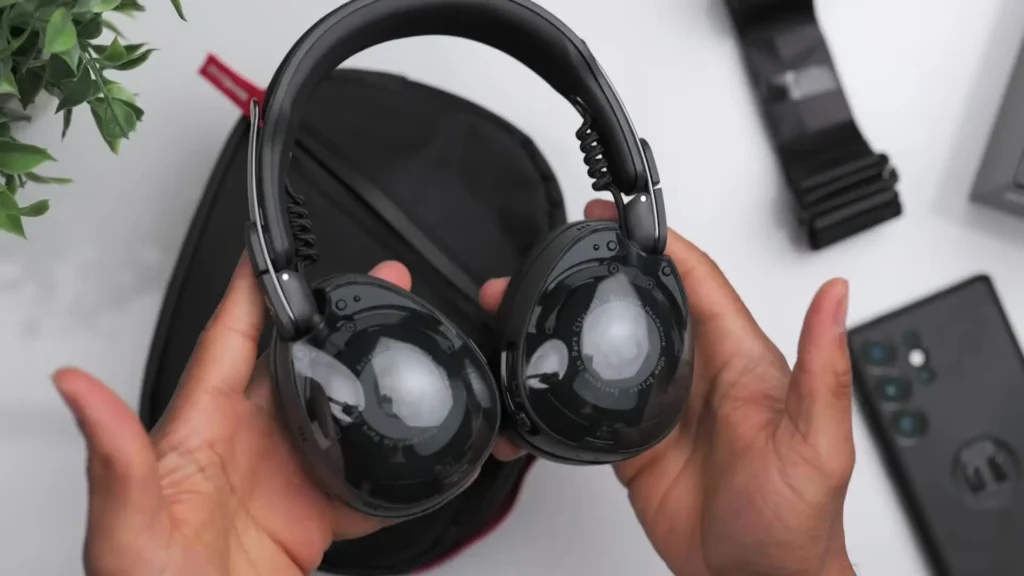
Beyond the aesthetics, they are super lightweight and genuinely comfortable to wear. They swivel, they fold, and when you take them off your head to rest them around your neck, you can flip them up or down depending on what feels more comfortable. In terms of comfort and portability, they have a lot going for them.
Button Layout and Controls
The control layout on the Skullcandy Aviator 900 is something I genuinely appreciate. When I first picked them up, I assumed the scroll wheel on the left side was for volume, but it is actually the ambient sound control.
I am fairly confident this is the first time I have used headphones with that type of dedicated scroll control for ambient modes, and it works really well. Scrolling all the way to the top activates noise cancellation, and it stops there so you know exactly where you are.
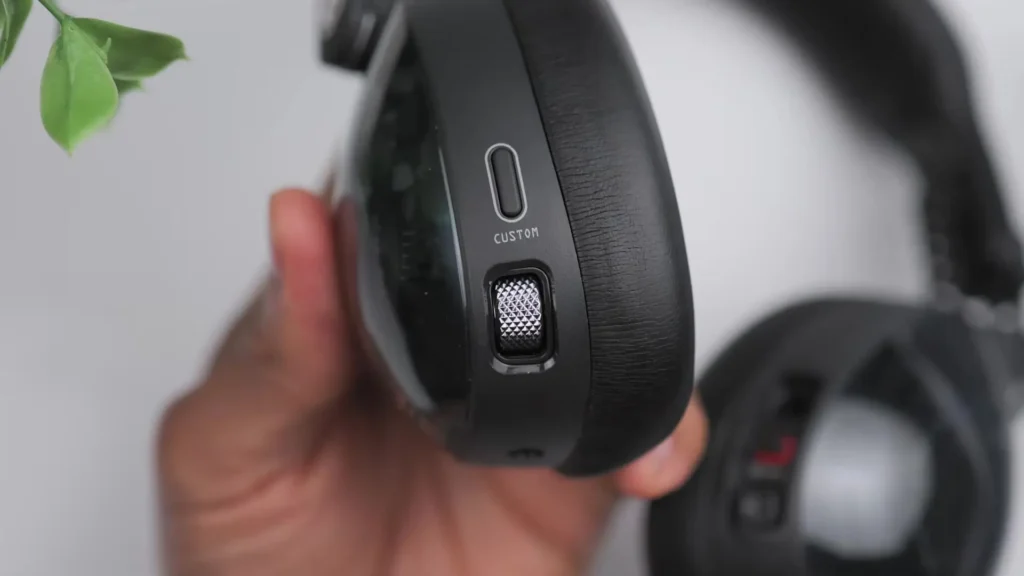
Scrolling to the middle turns the feature off, and scrolling all the way down switches you into transparency mode, where it also stops to confirm your position. It is quick, intuitive, and makes changing environments effortless.
There is also a custom button that, by default, controls your EQ settings. This is a feature you do not find on many headphones. You can cycle through preset EQ options directly from the headphone itself, and if you have a custom EQ profile set up, you can cycle through that too. It is a convenient touch that keeps everything within easy reach.
The joystick handles your track controls exactly as you would expect. Flick forward to skip a song, flick backward to go back, push up or down to adjust volume, and press it in for play and pause. And then there is the small display.
When I first saw the Skullcandy Aviator 900 advertised on Instagram, that little screen genuinely piqued my curiosity. In practice, it shows your volume level when adjusting, indicates play or pause status, and displays battery level while charging. It does not do a whole lot, and you cannot really see it while wearing the headphones anyway, but it is still a nice touch.
Also Read: Sony WH-1000XM3 Review
Sound Quality After the Firmware Fix
Sound quality is where this update made the biggest difference. The first time around, I was experiencing noticeable distortion, especially with bass-heavy songs. After the firmware update on this new pair, I can confidently say that problem is completely resolved.
The Skullcandy Aviator 900 does not deliver Skullcandy Crusher-level bass, so if that is what you are after, keep that in mind. However, these headphones are far from lacking in the low end. The bass is tight, controlled, and punchy, giving you a full and satisfying sound without crossing into overwhelming territory.
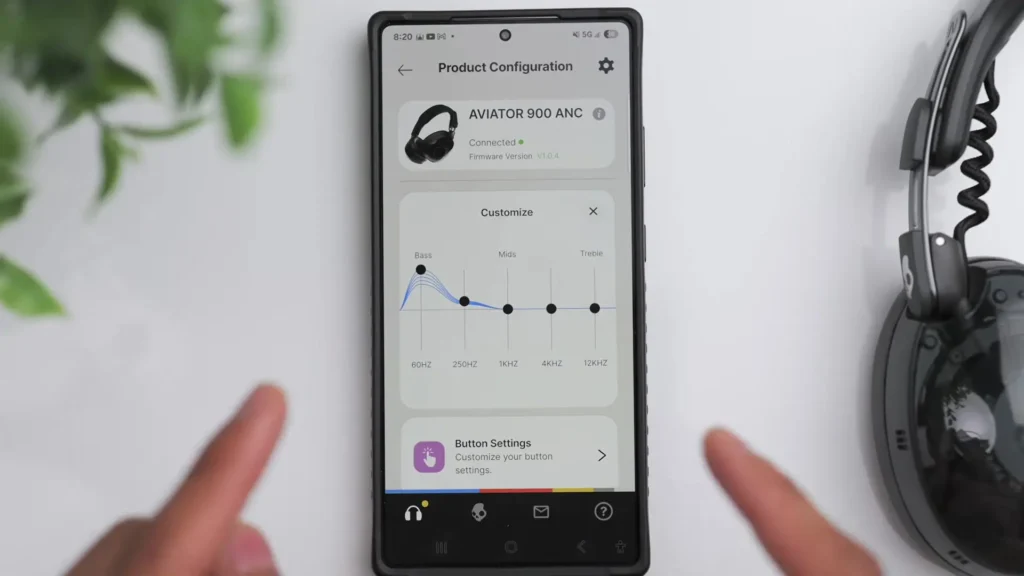
The clarity and definition are impressive, and I think the default EQ settings are very well balanced. Personally, I find the bass boost option sounds the best, though the music setting is also really solid.
What is interesting is that switching between the default EQ and the custom EQ almost feels like using two different pairs of headphones. With the default settings, everything stays controlled and clean, even at high volumes without anything becoming jarring or piercing.
When you switch into custom EQ mode, the volume jumps up significantly even without making any manual adjustments. If you love listening at high volumes, just switching to custom mode alone gives you that extra push.
You can also bring out a tremendous amount of definition and brightness through the custom EQ. Personally, I think it can get a little intense at the extreme end, but the option is there if you want it and you can tune things exactly to your preference.
Noise Cancellation
The noise cancellation on the Skullcandy Aviator 900 is solid. Is it at the same level as Sony, Bose, or Apple? Not quite. But you have to factor in the price. These retail at $300, which is a significant number, but it is not $450 like the new Sony XM6 or $550 like some of the premium options.
You are looking at well over a $100 price difference compared to the top tier. Whether that gap in noise cancellation performance justifies spending more is a personal decision, but for what you are paying, I genuinely think you are getting your money’s worth. For most people, the noise cancellation on the Aviator 900 is going to be more than enough.
Microphone Performance
The microphone does a reasonable job in everyday outdoor environments. It gives you a general idea of what call quality would sound like in a casual, real-world setting, which is typically the use case most people care about.
Specification Table
| Feature | Details |
|---|---|
| Model | Skullcandy Aviator 900 ANC |
| Type | Over-Ear Wireless Headphones |
| Price | $300 |
| Noise Cancellation | Active Noise Cancellation (ANC) |
| Ambient Sound Control | Dedicated Scroll Wheel (Left Ear Cup) |
| Spatial Audio | Yes (Fixed via Firmware Update) |
| EQ Control | Custom Button with Preset and Custom EQ Cycling |
| Playback Controls | Joystick (Skip, Rewind, Volume, Play/Pause) |
| Display | Small Screen (Volume, Playback Status, Battery) |
| App Support | Skullcandy App (Firmware Updates, Custom EQ) |
| Design Features | Swivel, Foldable, Lightweight Build |
| Microphone | Built-in for Calls and Voice |
| Firmware Update Required | Yes (Resolved Distortion and Spatial Audio Issues) |
| Compared To | Sony XM6 ($450), Bose, Apple AirPods Max |
Final Verdict
Bringing everything together, I like the Skullcandy Aviator 900. They are different, they sound great, and they are just a fun pair of headphones to use. They represent a nice change of pace from what we are used to seeing in this space.
Read More: Sendy Audio Apollo Pro Full Review