Whether you’re just starting out as a content creator or looking to upgrade your audio setup, choosing the right microphone can feel overwhelming. We put three of the most popular options head-to-head: the FIFINE K688, the Rode PodMic, and the Shure MV7, to help you decide exactly where your money should go.
Design & Build Quality
First impressions matter, and these three mics couldn’t feel more different in hand.
The FIFINE K688 is the lightest of the bunch, combining metal and plastic in a way that feels budget-conscious but not cheap. The green-and-black aesthetic is genuinely attractive, and the included shock mount adds a professional touch. The weakest point is the boom arm attachment, which feels a little plasticky, but at this price, it’s hard to complain.
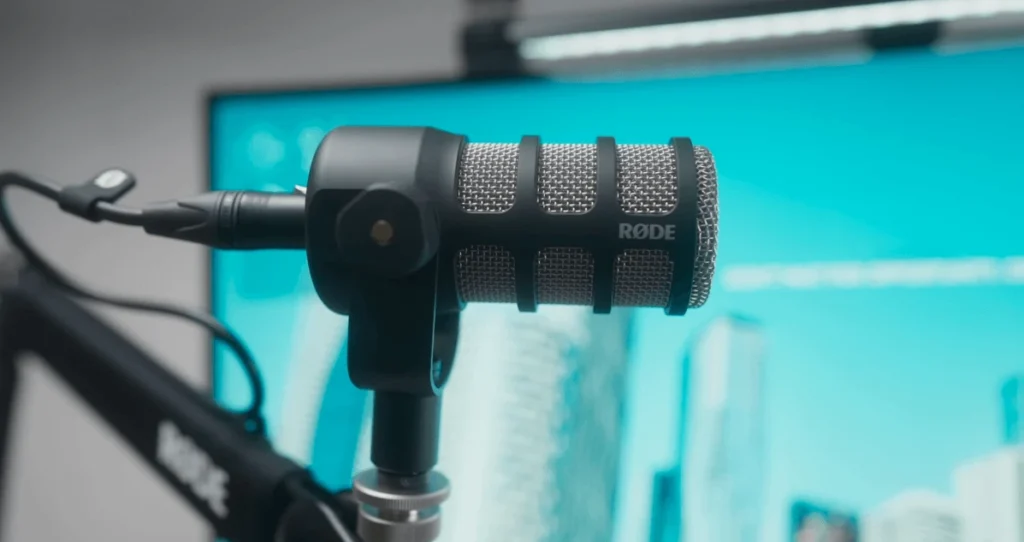
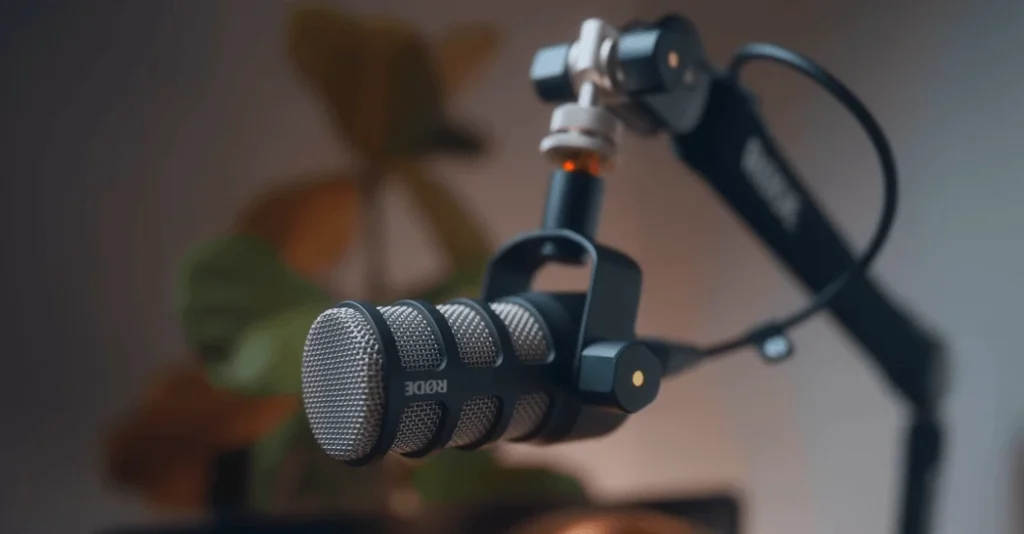
The Rode PodMic is in a completely different league when it comes to build quality. It’s heavy, almost entirely metal, and feels like something you’d find in a professional radio studio. The design has a timeless, old-school look that grows on you. There’s no removable pop filter, but the built-in one works well enough that you won’t miss it. This mic feels built to last a decade.
The Shure MV7 sits somewhere between the two, closer to the PodMic in solidity, but slightly less imposing. It’s mostly metal, includes a removable pop filter, and has a sleek, understated look. Oddly, despite being the most expensive of the three, it doesn’t quite feel the most premium. Still, the build quality is strong.
Winner: Rode PodMic, remarkable solidity for the price.


Features & Connectivity
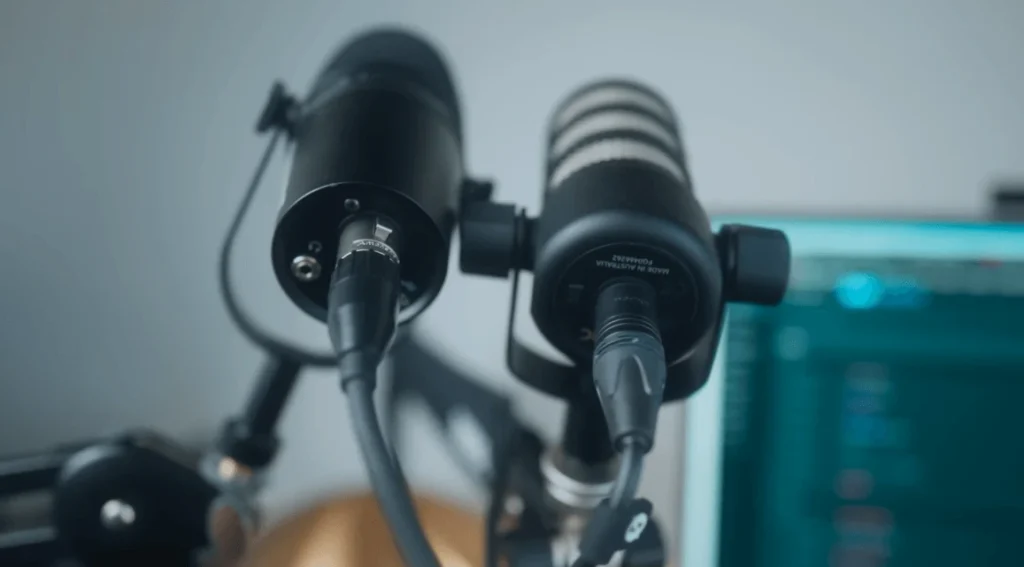
The K688 leads here by a comfortable margin. It offers both USB-C and XLR connectivity, a rare combination at this price, along with a headphone jack for live monitoring, a physical gain knob, and a colour-coded mute button on top. USB-C is a genuinely modern touch that many pricier mics still don’t offer.
The PodMic, by contrast, is feature-minimal by design. It has a single XLR output and nothing else, no monitoring, no gain control, no mute button. That’s not necessarily a flaw; it’s a deliberate focus on audio quality over bells and whistles. But it does mean you’ll need an external audio interface to use it at all.
The MV7 offers XLR and Micro-USB output, a headphone jack, a touch panel for gain and monitoring control, and a mute switch. It also has the ShurePlus MOTIV app, which lets you adjust EQ presets and record directly to your computer. The touch panel can feel slightly finicky compared to the K688’s physical knob. The Micro-USB port is a dated choice that feels out of place on a $179 microphone.
Winner: FIFINE K688, best feature set per dollar, with genuinely modern connectivity.
Sound Quality
This is where things get nuanced.
Background hiss, that unwanted noise floor that makes amateur recordings sound amateur, varies significantly across these three mics.
The Shure MV7 is the clear winner here. At normal gain levels via USB or XLR, background hiss is nearly nonexistent. Even when you push the gain, it remains manageable. This is the most plug-and-play and sound-good microphone of the three.
The Rode PodMic comes in second. There’s some background hiss at standard gain levels, but it’s well within acceptable limits and easy to treat in post-production.
The FIFINE K688 tells two different stories depending on how you connect it. Via XLR, it performs comparably to the PodMic, with decent hiss levels and nothing alarming. Via USB, however, the noise floor is noticeably higher, even at standard gain. Push the gain too much, and the hiss becomes a real problem. If you’re using the K688 via USB, you’ll want to sit close to it and keep your gain conservative.
Background noise rejection follows the same order: the MV7 excels, the PodMic is decent, and the K688 is the most sensitive to ambient sound.
Sound signature is more subjective. The K688 via XLR produces a warm, low-heavy tone that, with basic EQ applied, genuinely resembles the Shure SM7B, which is remarkable at its price point. The PodMic sounds mid-range heavy out of the box and needs EQ work to reach its potential, but once dialled in, it’s rich and warm. The MV7 sounds the most balanced straight out of the box, particularly over XLR.
Out-of-box sound winner: Shure MV7. Best-sounding after EQ: a close call between the K688 (XLR) and PodMic.
Full Specifications Comparison
| Specification | FIFINE K688 | Rode PodMic | Shure MV7 |
| Price | ~$70 | ~$90 | ~$179 |
| Connectivity | USB-C + XLR | XLR Only | Micro-USB + XLR |
| Polar Pattern | Cardioid | Cardioid | Cardioid |
| Frequency Response | 50Hz – 16kHz | 20Hz – 20kHz | 50Hz – 16kHz |
| Sample Rate | 192kHz | N/A | 48kHz |
| Bit Depth | 24-bit | N/A | 24-bit |
| Max SPL | 110dB | 115dB | 110dB |
| Gain Control | Physical Knob | No | Touch Panel |
| Mute Switch | Yes (colour-coded) | No | Yes |
| Pop Filter | Removable | Built-in | Removable |
| Shock Mount | Included | Not Included | Not Included |
| Companion App | No | No | ShurePlus MOTIV |
| Background Hiss (USB) | Notable | N/A | Minimal |
| Background Hiss (XLR) | Low | Low-Medium | Very Low |
| Noise Rejection | Fair | Good | Excellent |
| Build Material | Metal + Plastic | Mostly Metal | Mostly Metal |
| Weight | Light | Heavy | Medium |
| Best For | Streamers | YouTubers | Podcasters |
The PodMic offers the best overall value when you factor in build quality and long-term sound potential. The K688 is the best value for someone who wants to plug in and go without buying additional hardware. The MV7 is the hardest to justify on value alone, but it earns its price through versatility and a superior noise floor.
Who Should Buy Which Mic?
Buy the FIFINE K688 if you’re a streamer. You’ll be at a fixed desk, close to the mic, and the USB-C setup means zero extra gear. The warm sound and solid feature set make it an outstanding budget pick, just stick to XLR if you can.
Buy the Rode PodMic if you’re a YouTuber. You have time to EQ your audio in post, you want gear that lasts, and you’re comfortable investing in an audio interface. The PodMic rewards effort with genuinely professional results.
Buy the Shure MV7 if you’re a podcaster. You may be recording in different environments with different guests. The MV7’s reliability, low noise floor, and excellent background rejection make it the most consistently strong performer across varied conditions.
Final Thoughts
The Rode PodMic remains the top overall recommendation, with exceptional build quality, great long-term sound, and strong value at $90. It’s not the easiest mic for beginners, but for anyone willing to invest a little time in their audio setup, it’s hard to beat.
That said, the FIFINE K688 is the biggest surprise here. For $70, it delivers warmth and features that have no business existing at this price point. And the Shure MV7 remains the gold standard for reliability when conditions are unpredictable.
The right mic isn’t the most expensive one. It’s the one that fits how you actually create.
Read More: JBL Go 4 vs Clip 5: Which Speaker Should You Actually Buy?