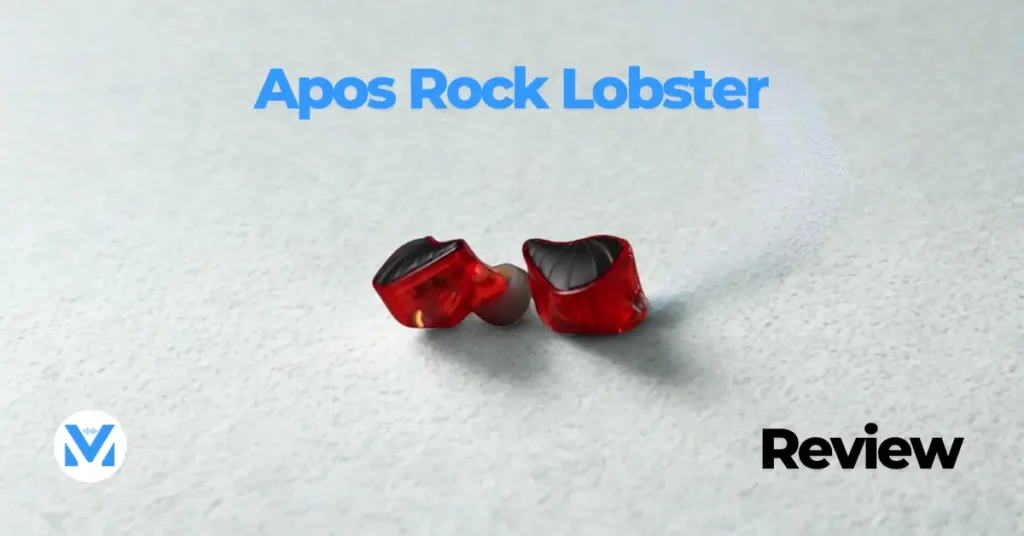
There are a lot of in-ear monitors on the market today, but almost all of them are tuned with the same audience in mind: pop and hip-hop listeners. The Apos Rock Lobster, however, takes a completely different approach. Developed by Apos in collaboration with their own community, the Rock Lobster is specifically engineered to excel when listening to metal and rock across all its subgenres. That alone makes it stand out in a crowded market and it’s what first caught my attention.
As someone who listens to a wide variety of genres but gravitates most naturally toward rock and metal, I was genuinely intrigued to try a pair of IEMs that felt like they were built for me. That feeling of being spoken to as a listener rather than being an afterthought in a sea of bass-heavy consumer audio is refreshing, and the Rock Lobster delivers on that premise from the moment you pick up the box.
Pricing and What You Get
From a pricing standpoint, the Rock Lobster is very reasonable. It retails at $60 and comes in two configurations: one with a standard 3.5 mm plug and another with a 4.4 mm balanced plug. For those who want both, which is honestly worth considering Apos bundles them together for $70. That extra $10 gives you the versatility to plug straight into any standard device while also having the balanced connection ready for use with an amp or DAC. It’s a smart, user-friendly offering.

Packaging and Accessories
The packaging on the Rock Lobster immediately signals what kind of product this is. The cover features a lobster sporting a mohawk, tattoos, a beer, and a mic it’s bold, fun, and unapologetically rock. Remove the outer sleeve, and you’re greeted with what essentially reads like a set list: a rundown of the rock subgenres these IEMs were made for. It’s a clever marketing touch that makes the product feel personal and targeted.
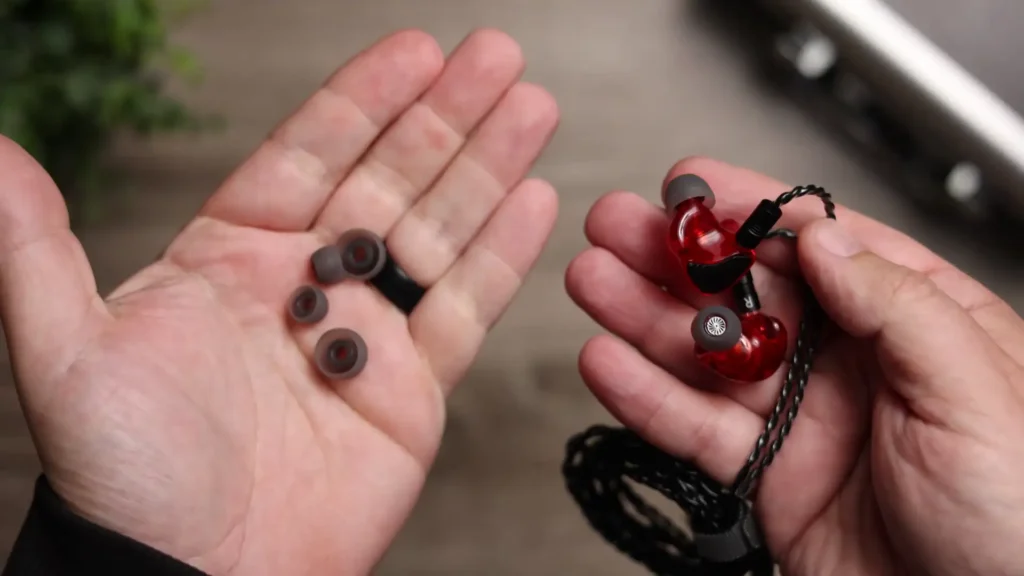
Inside the box, you’ll find a braided cable and three sets of silicone ear tips. What’s particularly interesting is how Apos has approached the ear tips. Rather than tuning the driver itself to emphasize the low end, which would compromise the mids and treble Apos instead let the ear tips do that work. The silicone tips are specifically selected to accentuate bass response. It’s a smart, technically sound decision that allows the IEM’s driver to focus on what rock and metal really need: detailed, present mids and controlled treble.
Design
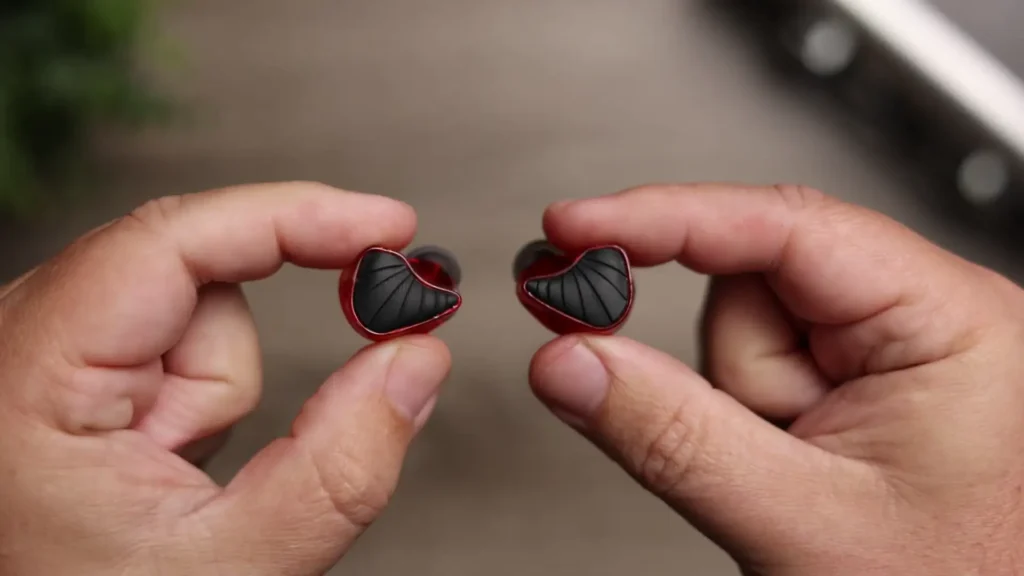
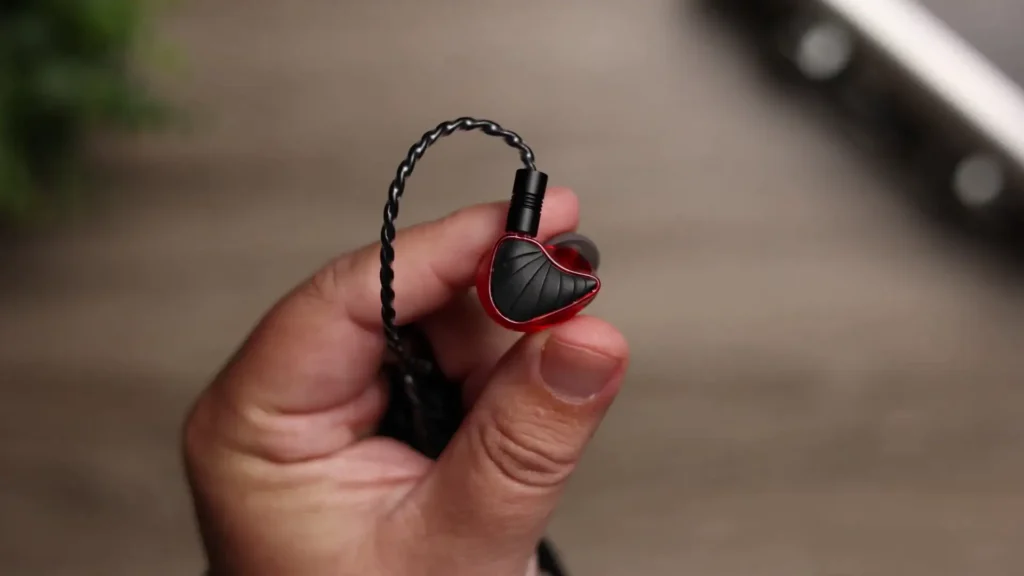
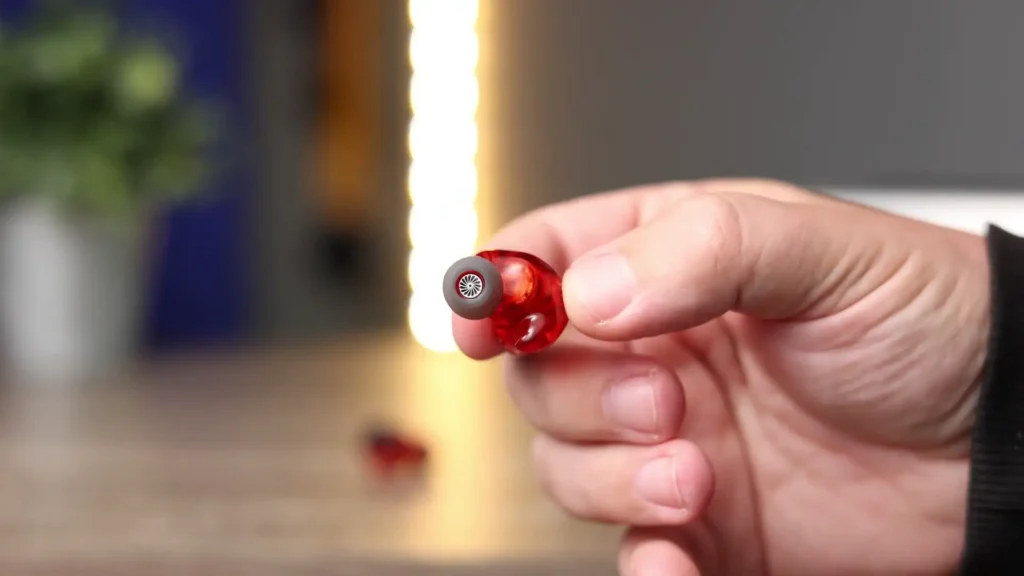
The IEM itself is designed to look like a lobster tail primarily red with a black faceplate etched with lines that mimic the segmented appearance of a crustacean shell. It’s unique, eye-catching, and fully consistent with the Rock Lobster theme. Whether or not bold aesthetics are your thing, you have to appreciate the commitment to the concept. These don’t look like any other IEM on the market, and that’s clearly the point.
Driving the Rock Lobster
With an impedance of 32 ohms and a sensitivity of 105 dB, the Rock Lobster is not a difficult IEM to drive. Plugging directly into a laptop, tablet, or smartphone yields perfectly adequate volume levels without any strain. That said, as is always the case with any quality IEM, pairing these with an amplifier or a DAC genuinely brings them to life. Even a small, portable DAC amp that connects directly to your phone can make a noticeable difference. It’s not required, but if you want to get the most out of these, it’s worth the investment.

Sound Quality
If you’re a bass-head who craves deep, rumbling sub-bass with a loose, reverberating quality, the Rock Lobster is probably not for you. However, that doesn’t mean the low end is lacking. There is plenty of punch here, it hits firmly and moves on quickly, without bleeding into the mids or highs. This kind of tight, controlled bass is exactly what rock and metal demand. Kick drums land with impact, and bass lines are felt without overwhelming the rest of the mix.
Midrange
The mids are where the Rock Lobster truly shines, and it shows in everything from vocal performance to guitar tone. Vocalists have a strong, natural presence always sitting forward in the mix without feeling pushed or artificial. The bass adds a subtle warmth that prevents the mids from sounding thin or overly clinical, resulting in a smooth, organic feel. Nothing here sounds processed or overworked; it simply sounds like music.
Guitars, in particular, benefit enormously from this tuning. The increased detail and forward presence allow you to hear nuances in guitar playing that are often buried in more consumer-oriented headphones and earbuds. Riffs, chord textures, and tonal dynamics all come through with clarity. Combined with that forward vocal presence, the listening experience is quite literally a breath of fresh air compared to the muddier, bass-heavy sound many people are used to.
Treble
The treble on the Rock Lobster is thoughtfully handled. Rather than cranking it up to create an artificial sense of detail or “air,” Apos has kept it smooth and warm. This is critical for rock and metal listening, where cymbal crashes and certain vocalists can become painfully sharp on poorly tuned earphones. There is no harshness, no peakiness, and no sense of the treble tipping into ear fatigue territory. After extended listening sessions, the Rock Lobster remained comfortable and enjoyable a testament to how well the tuning is balanced.
Soundstage and Imaging
If there is one area where the Rock Lobster falls short of its own ambitions, it’s the soundstage. For an IEM marketed specifically toward rock and metal listeners, a wider, more expansive soundstage would have been a natural and welcome complement. Ideally, these would make you feel like you’re standing in a concert venue, immersed in the energy of a live performance. Instead, the soundstage feels more like a medium-sized room present and functional, but not particularly immersive.
This is the one piece of constructive feedback worth passing along to Apos and the community that shaped this product: opening up the soundstage just a bit would elevate the Rock Lobster from excellent to exceptional for its target audience.
Versatility
Here’s something that may surprise you: the Rock Lobster performs admirably across a wide range of genres. Don’t let the rock-and-metal branding fool you into thinking it’s a one-trick pony. The same qualities that make it great for guitars and electric drum kits forward mids, vocal clarity, and controlled bass also translate beautifully to genres that are heavily vocal or instrument-driven.
Classical strings, singer-songwriter acoustic music, jazz all of these genres benefit from the Rock Lobster’s tuning philosophy. The warmth, detail, and smoothness make it a genuinely versatile IEM that simply happens to excel most naturally in rock territory.
Table of Contents
Article Summary
The Apos Rock Lobster is a genuinely exciting product, not just because of what it sounds like, but because of what it represents. It’s a community-driven IEM that dares to cater to a listener demographic that is all too often ignored by the mainstream audio market. From the irreverent, rock-inspired packaging to the thoughtful tuning choices that put mids front and center, every aspect of the Rock Lobster feels deliberate and considered. At $60 or $70 for both cable terminations it represents exceptional value for anyone who loves rock and metal, or for listeners who simply want a more vocal and instrument-focused sound signature.
Read More: Top 5 Budget IEMs for Gaming 2026