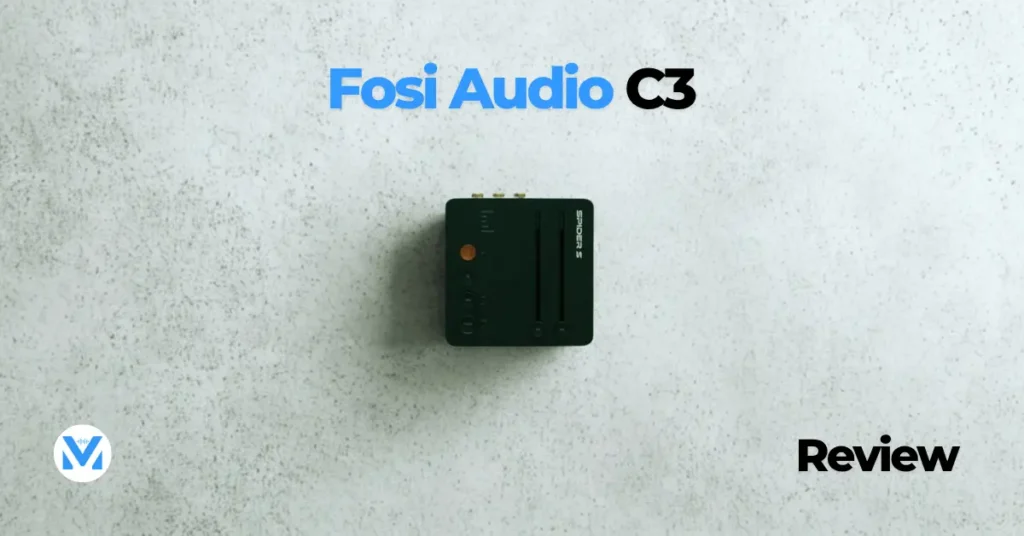
AI is continuing to impact every single industry, and the audio world is no exception. Today we are looking at the Fosi Audio C3, a compact gaming DAC and amplifier that takes much of what made the beloved K7 so great and shrinks it down into a smaller, more affordable package.
In fact, the Fosi Audio C3 actually adds features that even the Fosi Audio K7 does not have, and it comes in at a cheaper price of around $130. It is currently live on Kickstarter, and Fosi Audio was kind enough to offer an additional 5% discount on top of the existing Kickstarter pricing, which brings this thing in at roughly $100.
What Exactly Is the Fosi Audio C3?
At its core, the Fosi Audio C3 is a headphone output and microphone input device with a solid range of options to manipulate and fine-tune both of those functions. It is built primarily around gaming, and it even includes some AI-powered features designed specifically with gaming in mind.
In straightforward terms, this is a gaming DAC and amplifier with a microphone input, and it punches well above its price point in terms of what it delivers.
Build Quality and Design
The build quality of the Fosi Audio C3 is essentially on par with the K7, and that is genuinely a compliment. Build quality is something that Fosi Audio consistently does really well. Their products feel polished, well-constructed, and solid in hand.
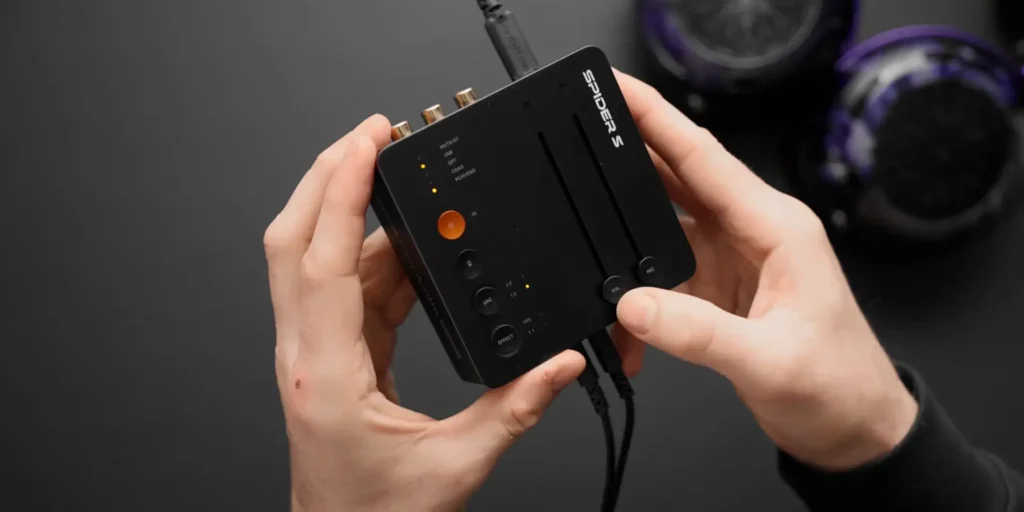
All the buttons on the Fosi Audio C3 feel great, and the sliders for both volume and microphone control feel satisfying to use. This is not a device that feels cheap or plasticky despite its price. It feels like a product that was genuinely thought through from a hardware standpoint.
Input and Output Options
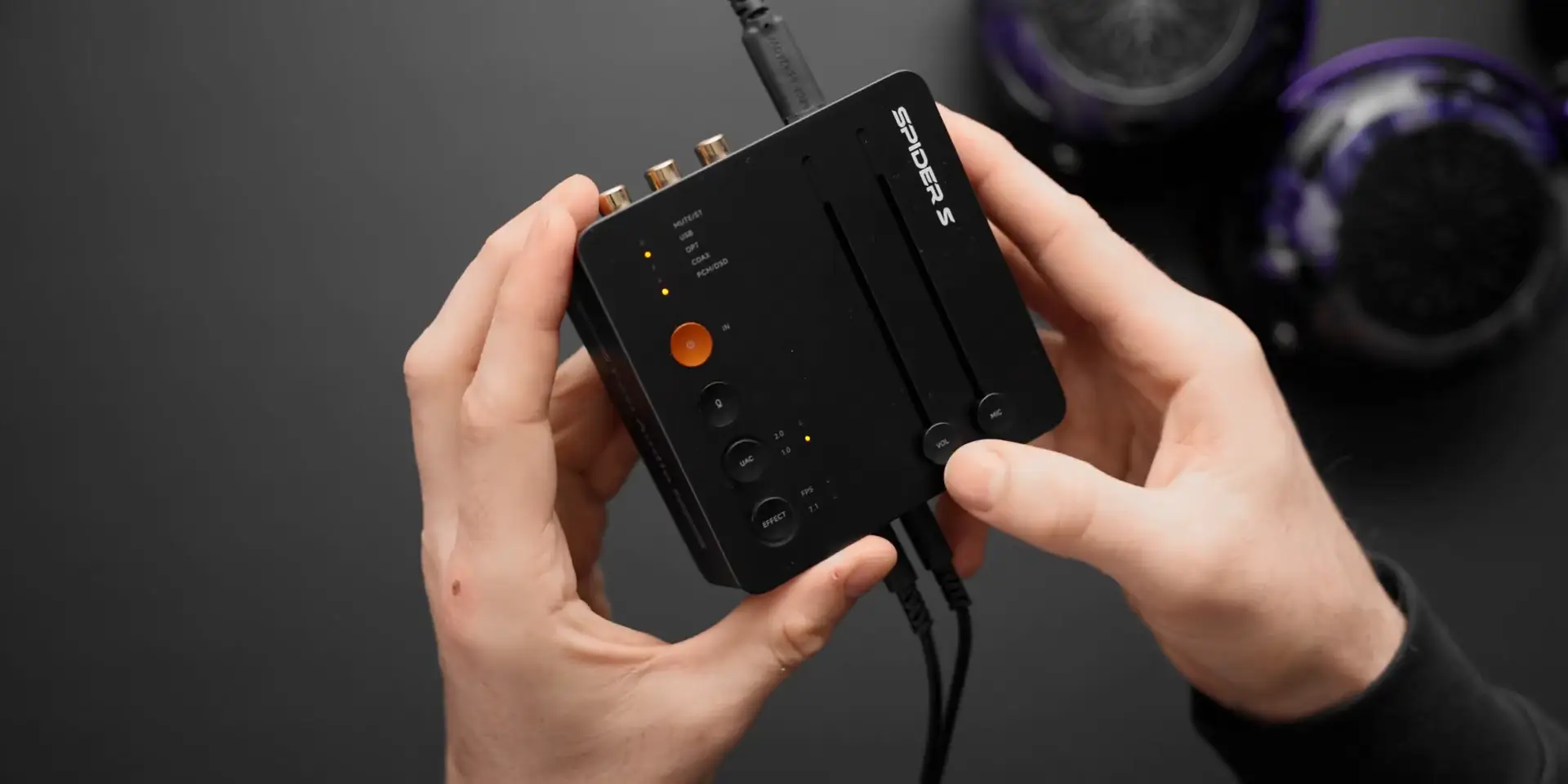
The input and output options on the Fosi Audio C3 are well-rounded for its price range. You get one USB-C port, which is used for power since this device does not require a separate power brick. Beyond that, there is an optical input, a coaxial input, and RCA outputs. One important thing to note about those RCA outputs is that they are volume controlled and they play simultaneously with the headphone output.
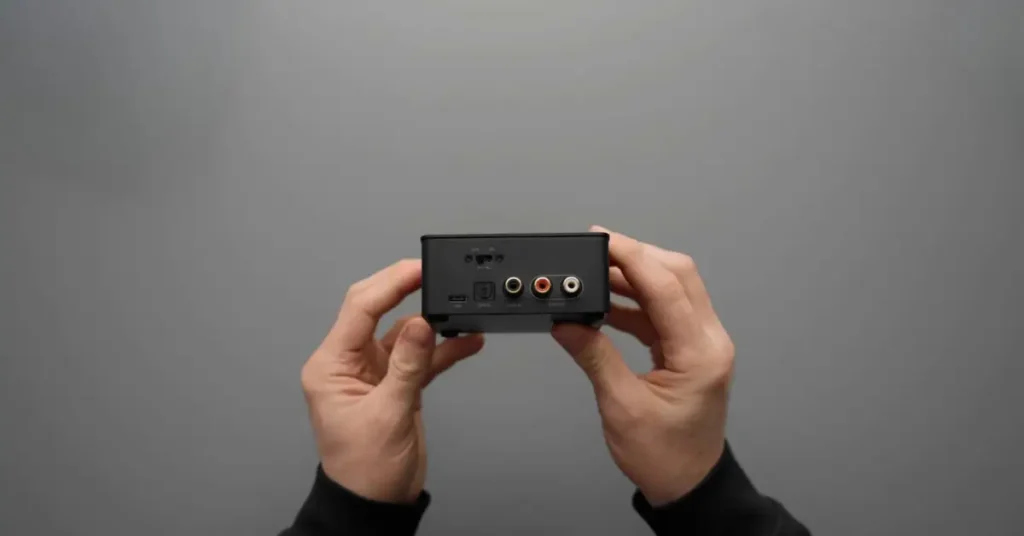
There is no way to isolate one from the other, so both the RCA and headphone output are always active at the same time. For the price and the audience this is aimed at, these IO options feel just right. It is hard to imagine most users needing more than what this provides.
Headphone Output Performance
When it comes to the headphone output, the Fosi Audio C3 delivers a clean signal that performs well across a wide range of headphones. There are some power limitations when you push it with really demanding, high-end planar magnetic headphones, but even something like the ROG Cetra, which is a planar gaming headphone, performed really well on the C3.
The performance difference between the Fosi Audio C3 and the Fosi Audio K7 is not particularly noticeable with headphones that sit at a normal efficiency level. The gap does become more apparent when you get into more power-hungry planar magnetic headphones, but for the vast majority of gaming headphones and even many audiophile headphones, the C3 handles things perfectly well in practical use.
The C3 uses a CS43131 DAC internally, which is a 32-bit DAC. However, you will only be accessing that full 32-bit capability if you are running DSD mode through UAC 2.0. Speaking of UAC modes, the device supports both UAC 2 and UAC 1. For most users, UAC 1 is going to be the go-to mode, and for good reason.
The microphone input only functions in UAC 1 mode, and UAC 1 is also where compatibility lives for Windows, Nintendo Switch, PlayStation, and essentially every major platform you might want to connect this to.
UAC 2 really only makes sense if you are specifically running DSD, which comes with its own downsides, including losing access to the gaming modes that this device is designed to offer. For most people, UAC 1 is simply the better choice.
Read More: Apos Rock Lobster IEMs Review
Microphone Input and Features
The microphone input on the Fosi Audio C3 is genuinely one of its most interesting and well-developed features. There is a good amount of control packed into what the C3 offers on the microphone side of things.
To give a real-world sense of how it works, the review was done using a prototype gaming microphone with a fan running in the background, making it possible to actually hear and compare the noise cancellation feature in action.
The noise cancellation on the C3 does a genuinely impressive job of reducing background noise. The difference between having it on and off is clearly audible and the results are not subtle. This is not a gimmick feature; it functions as advertised and makes a real difference in audio clarity during voice communication.
One thing worth knowing is that if you are using the side tone feature, which feeds microphone audio back through your headphones so you can hear yourself speak, enabling noise cancellation does introduce approximately a 50 millisecond delay.
This results in a slight echo effect that some users may find distracting. When using side tone without noise cancellation, this delay disappears entirely and the playback sounds natural and responsive. So it is a minor tradeoff to be aware of depending on how you prefer to set things up.
Beyond noise cancellation, the C3 also includes a physical volume control for the microphone that lets you raise and lower levels directly on the unit, which is a convenient touch. There is also a physical mute switch for those who do not have a mute button on their microphone cable.
You can press it once to fully mute the mic and press it again to bring it back. Side tone itself can be activated by pressing and holding a button until the indicator light turns on, and then pressing and holding again to turn it off.
AI-Powered Gaming Features
Now here is where things get genuinely interesting. The Fosi Audio C3 includes AI-powered gaming modes, and while the feature set is still growing, what is already here is impressive enough to take seriously. Currently, the AI mode covers three games: PUBG, CS:GO, and Valorant. This feature was tested, and the difference is both audible and visually measurable in the waveform data.
What the AI mode effectively does is significantly enhance the volume of in-game footsteps. To make the comparison as fair as possible, recordings were captured at exactly the same output level with no volume changes between them.
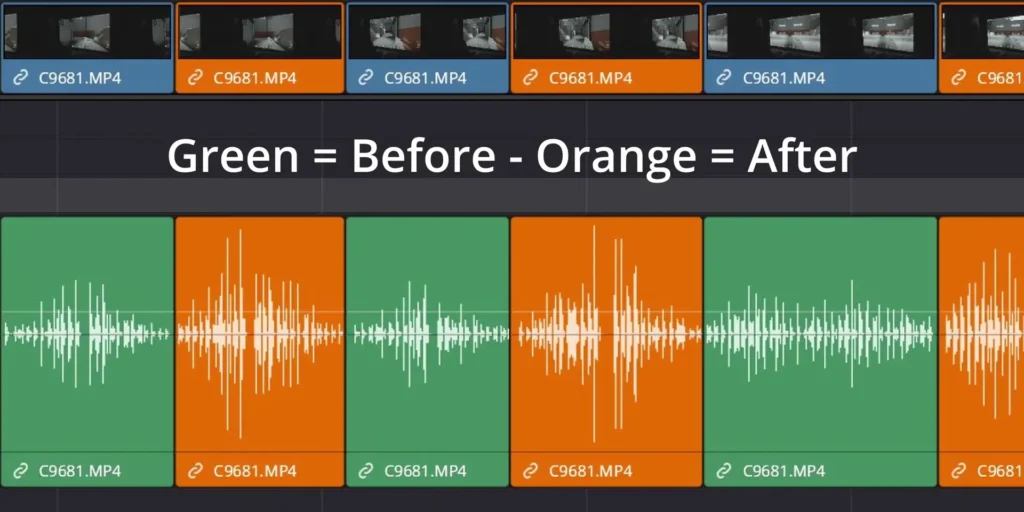
The only variable was whether the AI mode was on or off. Looking at the waveforms side by side, the jump in footstep volume with the AI mode enabled is visually obvious. This is not a subtle change, and it is not a gimmick.
For someone who is deep into a game like CS:GO, the competitive advantage this provides could be quite meaningful. Even as someone who does not play CS:GO regularly, the difference in how obvious and present the footsteps were felt significant in actual gameplay. It is not about changing the positional quality of sound so much as it is about making those critical audio cues much more prominent and easy to detect.
This naturally raises the question of whether using such a feature constitutes cheating. It is genuinely a complicated question. On one hand, the feature is enhancing something beyond what the game natively outputs. On the other hand, high-quality gaming headphones have been providing exactly that kind of audio advantage for years.
If you own a premium gaming headset, you already have a meaningful edge over someone using budget or built-in audio. And when it comes to PC gaming broadly, hardware advantages tied to spending more money have existed for a long time. Where exactly the line falls is something each person is going to have to decide for themselves.
There are also some questions worth raising around the roadmap for this feature. Which games will be added next, and will Fosi Audio use user input data to train AI models for additional titles? For example, a footstep enhancement mode for a game like Battlefield 6 would be highly appealing to many players.
At the same time, for anyone concerned about privacy, it would be important to know whether that kind of data collection is opt-in or opt-out and which AI training model Fosi Audio is working with.
Read More: Turtle Beach Atlas 200 Headset Review
Where the C3 Fits in the Market
The Fosi Audio C3 occupies a genuinely interesting and somewhat unique position in the audio market. From a headphone output perspective, it delivers a noticeably cleaner and better signal than onboard motherboard audio, even if it does not quite reach the performance level of dedicated audiophile amplifiers.
But what sets it apart from both of those options is the combination of software features and microphone functionality that neither onboard audio nor most audiophile amps can offer.
Compared to standard motherboard sound card options, the Fosi Audio C3 is well ahead in terms of both audio quality and feature set. Compared to dedicated audiophile amplifiers, it trades a bit of raw power and peak fidelity for a much more versatile and gamer-focused feature package.
The sweet spot this device occupies is for someone who is primarily a gamer and wants meaningfully better audio than onboard sound, along with useful voice tools, without necessarily needing the full power of something like the K7.
C3 vs K7
The Fosi Audio K7 remains the better option for someone who leans more toward the audiophile side of things, or for someone who splits their time equally between gaming and serious music listening.
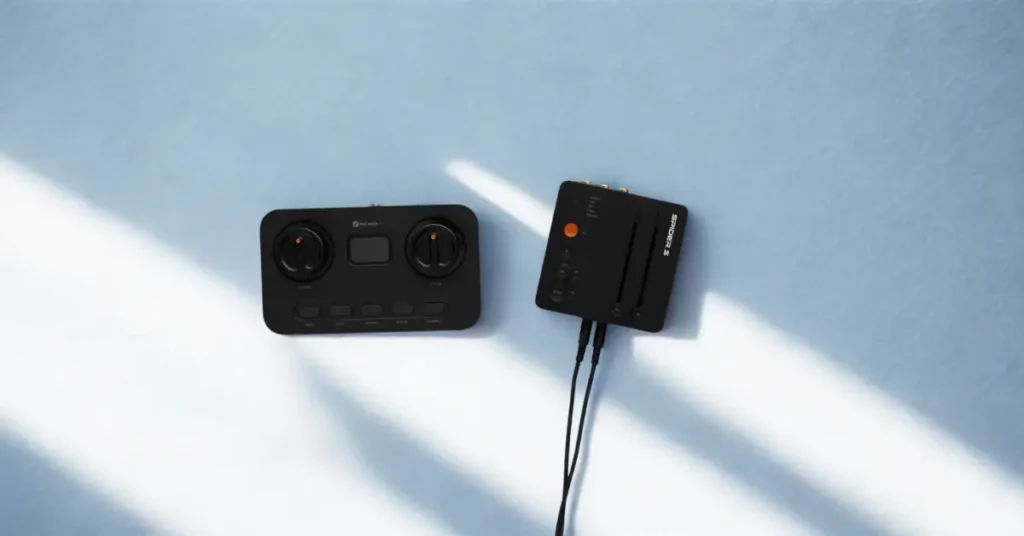
The Fosi Audio K7 has considerably more power and handles high-end planar magnetic headphones with greater authority, delivering a crisper and more detailed overall sound with stronger bass response for demanding headphones. However, it also has a larger physical footprint and does not include the voice isolation and AI gaming features that make the C3 stand out.

If you are purely a gamer and have no particular interest in audiophile-grade listening, the C3 is likely going to be the better fit. It does what you need it to do exceptionally well for its price, and the added features around microphone control and AI gaming modes are genuinely useful rather than just marketing points.
Getting the Best of Both Worlds
For those willing to spend a bit more, there is actually a compelling option that combines the strengths of both devices. Pairing something like the Magni by Schiit, which is a well-regarded audiophile amplifier with excellent power but no DAC or microphone input functionality, with the C3 is an interesting combination.
By running the RCA outputs of the Fosi Audio C3 into an amplifier like that, you get audiophile-grade amplification for your bigger, more demanding headphones, while still having the full feature set of the C3 available for gaming headphones and voice communication.
This kind of setup would cost somewhere in the $200 to $250 range but would actually offer more versatility and better performance across both gaming and music listening compared to buying just the Fosi Audio K7 alone.
Sound Quality Differences
In terms of actual sound quality differences, the gap between the C3 and more powerful dedicated amplifiers is most noticeable with very high-end planar magnetic headphones. On those types of headphones, the C3 can sound somewhat vague or less defined compared to more powerful options like the Fosi Audio K7, which tends to deliver a crisper and more crystal-clear overall sound.
Bass response is also more controlled and impactful on powerful dedicated amplifiers when driving demanding planars. However, for efficient headphones or in-ear monitors, the difference largely disappears, and the C3 performs admirably.
Specification
| Spec | Details |
|---|---|
| Product Name | Fosi Audio C3 |
| Type | Gaming DAC / Amplifier / Sound Card |
| Price | ~$130 (Kickstarter: ~$100 with 5% discount) |
| DAC Chip | CS43131 (32-bit) |
| UAC Modes | UAC 1.0 / UAC 2.0 |
| Power Input | USB-C (No separate power brick required) |
| Inputs | USB-C, Optical, Coaxial |
| Outputs | Headphone Out, RCA Out (Volume Controlled) |
| Microphone Input | Yes |
| Noise Cancellation | Yes (AI-powered) |
| Side Tone Support | Yes |
| Side Tone Delay (with NC) | ~50 milliseconds |
| Physical Controls | Volume Slider, Mic Volume Control, Mute Switch |
| AI Gaming Mode | Yes |
| Supported AI Game Titles | PUBG, CS:GO, Valorant |
| Platform Compatibility | Windows, PlayStation, Nintendo Switch |
| RCA Output Type | Volume Controlled, Always Active with Headphone Out |
| 32-bit Support | Only via DSD Mode on UAC 2.0 |
| Compared To | Fosi Audio K7 |
Final Verdict
Given everything the Fosi Audio C3 brings to the table, the pricing is genuinely fair. This is a product with a unique feature set that does not have a direct equivalent in the market at this price point. Even setting aside the AI gaming features entirely, the combination of a clean DAC and amplifier, a capable microphone input with noise cancellation, and broad platform compatibility makes this a well-rounded and compelling option for gamers.
The C3 is going to be an excellent choice for gamers who want a real and meaningful upgrade over onboard audio without jumping to a full audiophile setup. And for those who want to dig deeper into the possibilities, it also serves as a solid foundation that can be built upon with additional amplification down the line.
Table of Contents
Read More: PowerBeats Fit vs PowerBeats Pro 2 vs AirPods Pro 3